
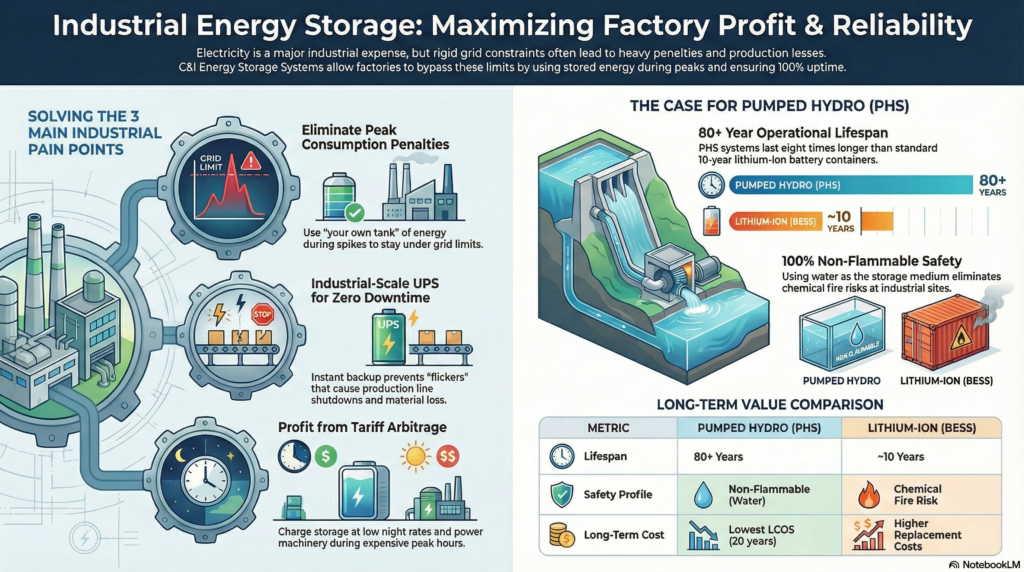
In the modern industrial sector, electricity is one of the largest operational expenses. However, the problem isn’t just the price per kWh; it’s the rigid constraints of the power grid. Factory directors are increasingly turning to Commercial & Industrial (C&I) Energy Storage Systems to stop being dependent on penalties and power outages.
Three Main Pain Points of the Industrial Sector (And How We Solve Them)
1. Peak Shaving: Cutting Spikes and Eliminating Penalties
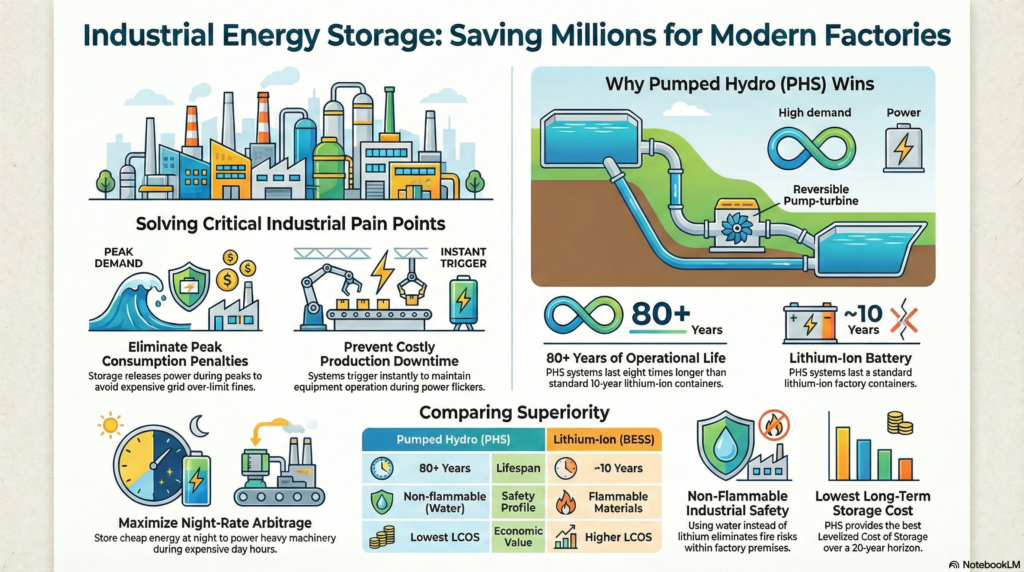
Power grids set strict consumption limits for factories. Whenever a plant turns on heavy machinery or furnaces during peak hours (morning and evening), it exceeds these limits and pays massive fines. Our Solution: The storage system releases power during these critical moments. The factory consumes energy from its «own tank» without exceeding grid limits. The result: millions saved in penalties.
2. Uninterrupted Power (Industrial Scale UPS)
Even a split-second «flicker» in the power supply at a high-tech facility (such as glass or chemical plants) leads to a total production line shutdown. This results in hours of downtime and a complete loss of raw materials. Our Solution: An industrial energy storage system acts as insurance. It triggers instantly, maintaining equipment operation until main power is restored.
3. Tariff Arbitrage: Energy at Night Prices
Electricity costs next to nothing at night and reaches maximum rates during the day. Our Solution: We offer Long-Duration Energy Storage (LDES) based on Pumped Hydro. You pump water into the reservoir at night using cheap electricity, and your machines run on that water during the day. This is the cleanest and most cost-effective economics in the energy sector.
Why Pumped Hydro (PHS) is the Best Choice for the C&I Segment?
Unlike popular lithium-ion containers (BESS), pumped hydro stations offer unique advantages to industrial companies:
- Lifespan: 80+ years (compared to 10 years for lithium).
- Safety: Completely non-flammable (it’s just water).
- Cost: The lowest Levelized Cost of Storage (LCOS) over a 20-year horizon.
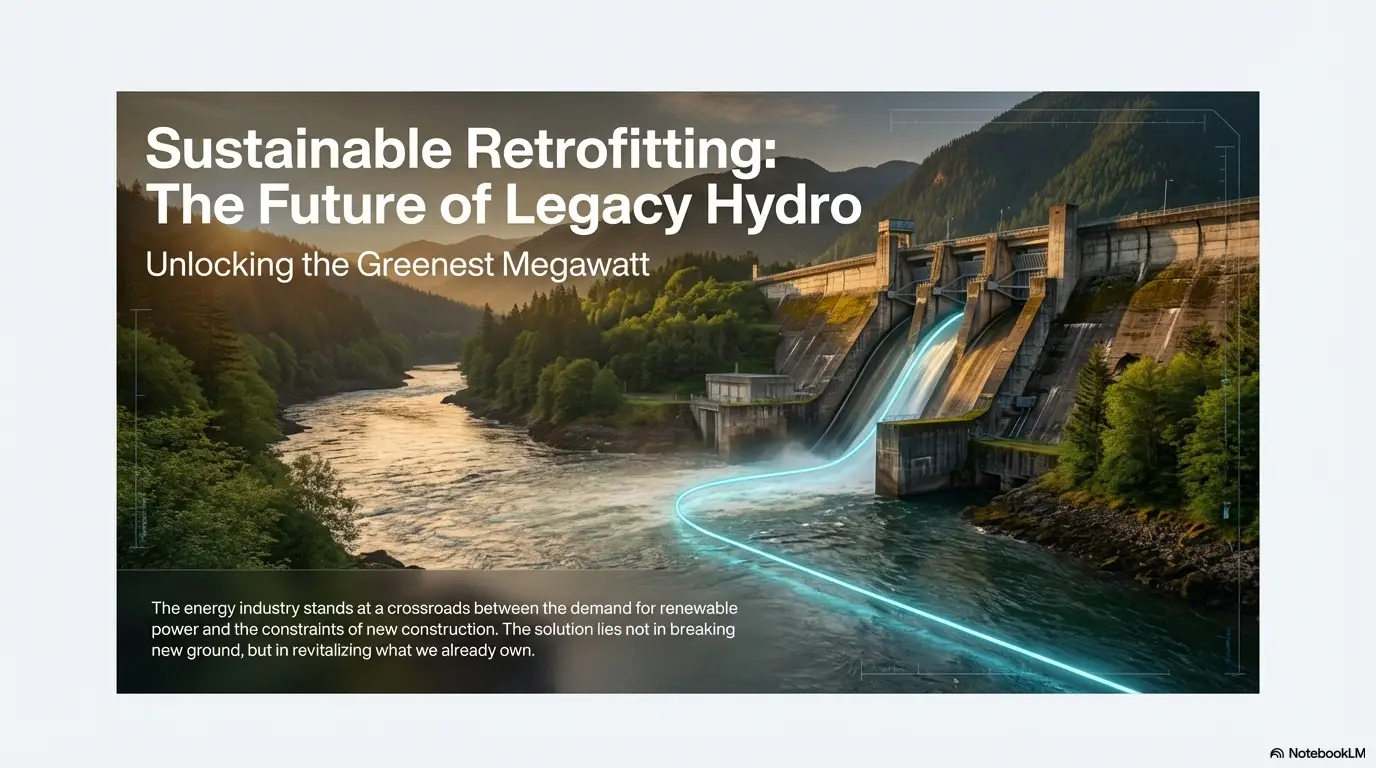
Sustainable Retrofitting — New Life for Legacy Hydro
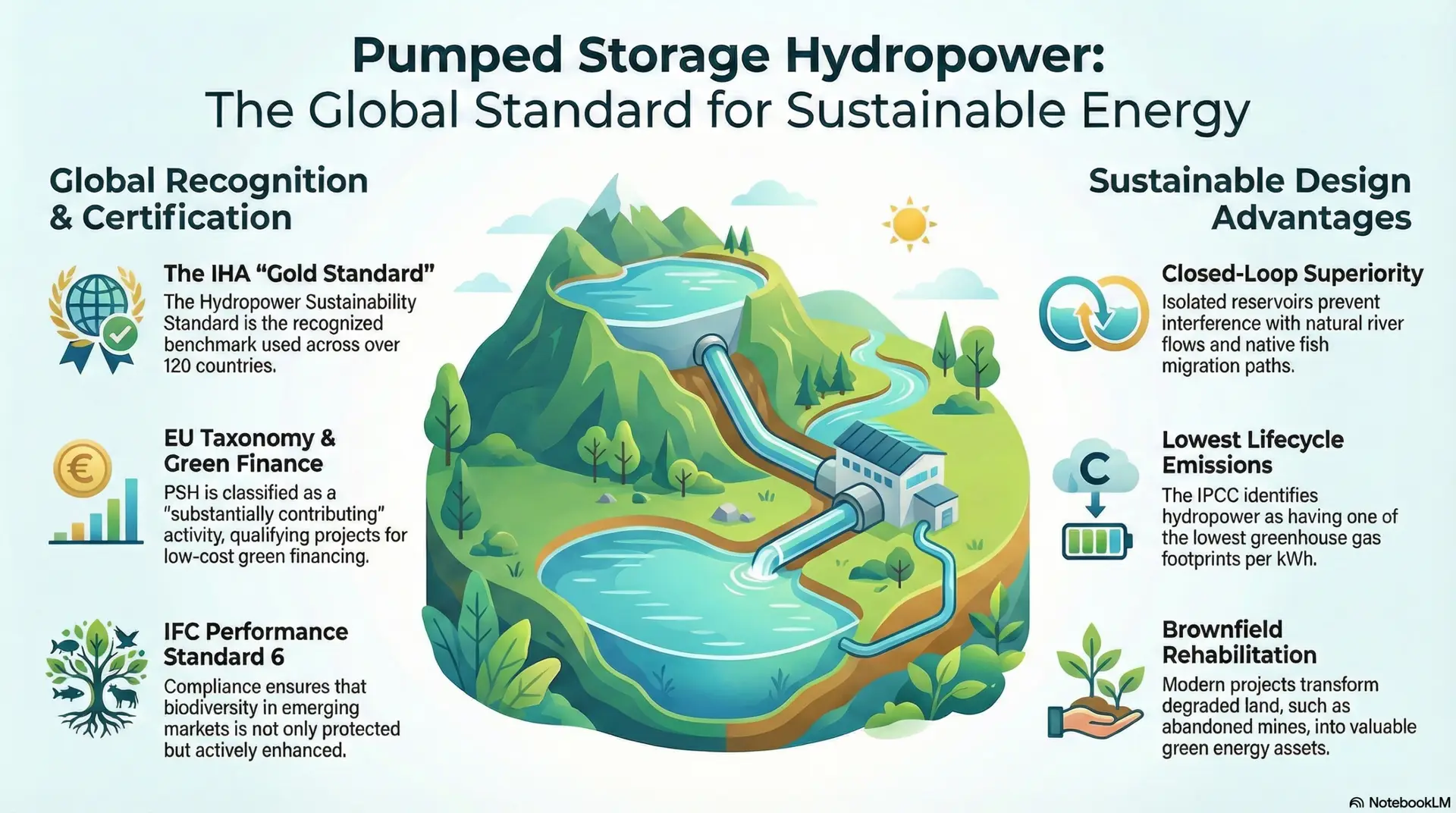
Environmental Harmony: Why Modern PSH is a Green Solution
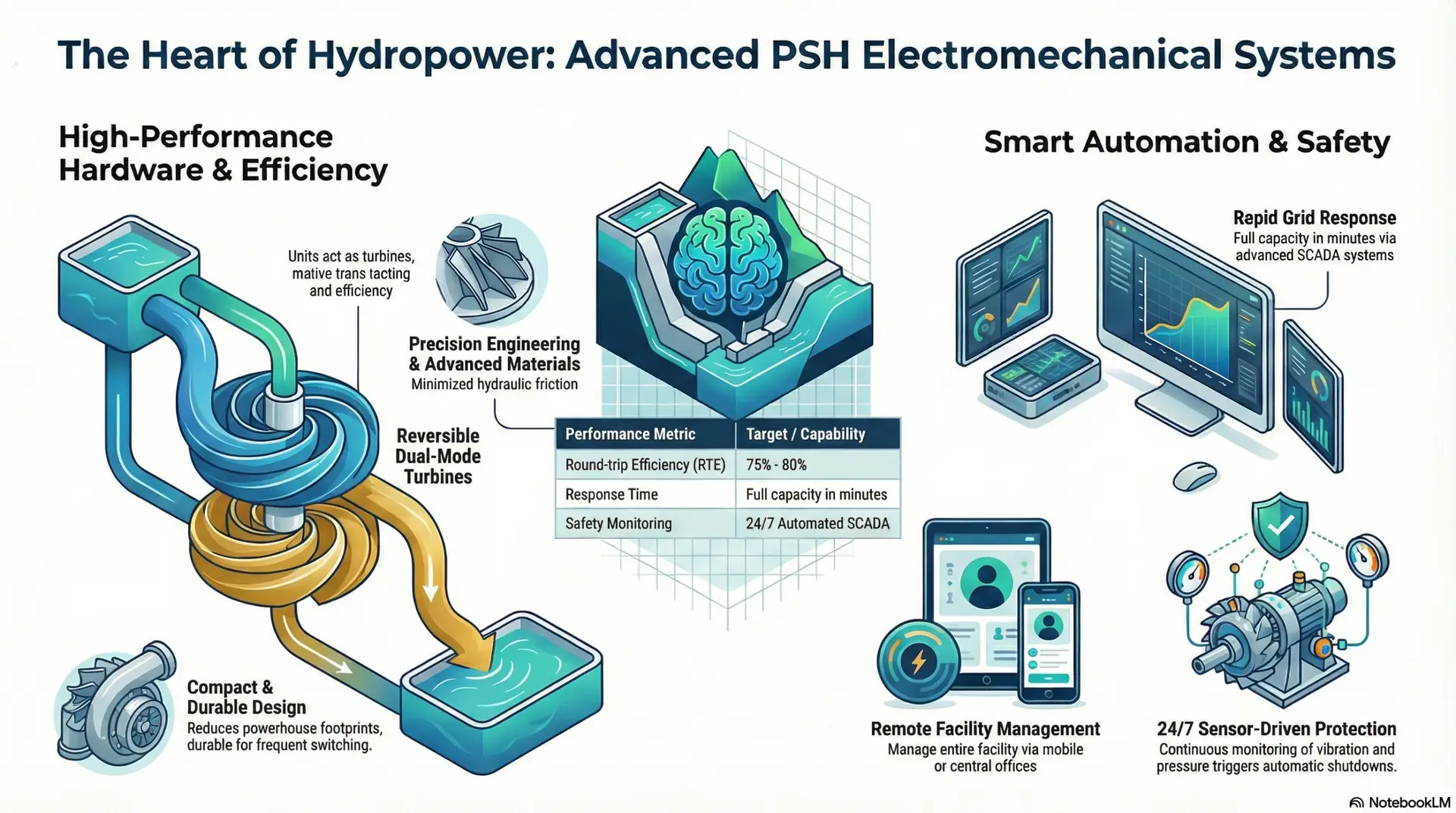
Electromechanical Equipment: The Heart of the Hydropower Plant
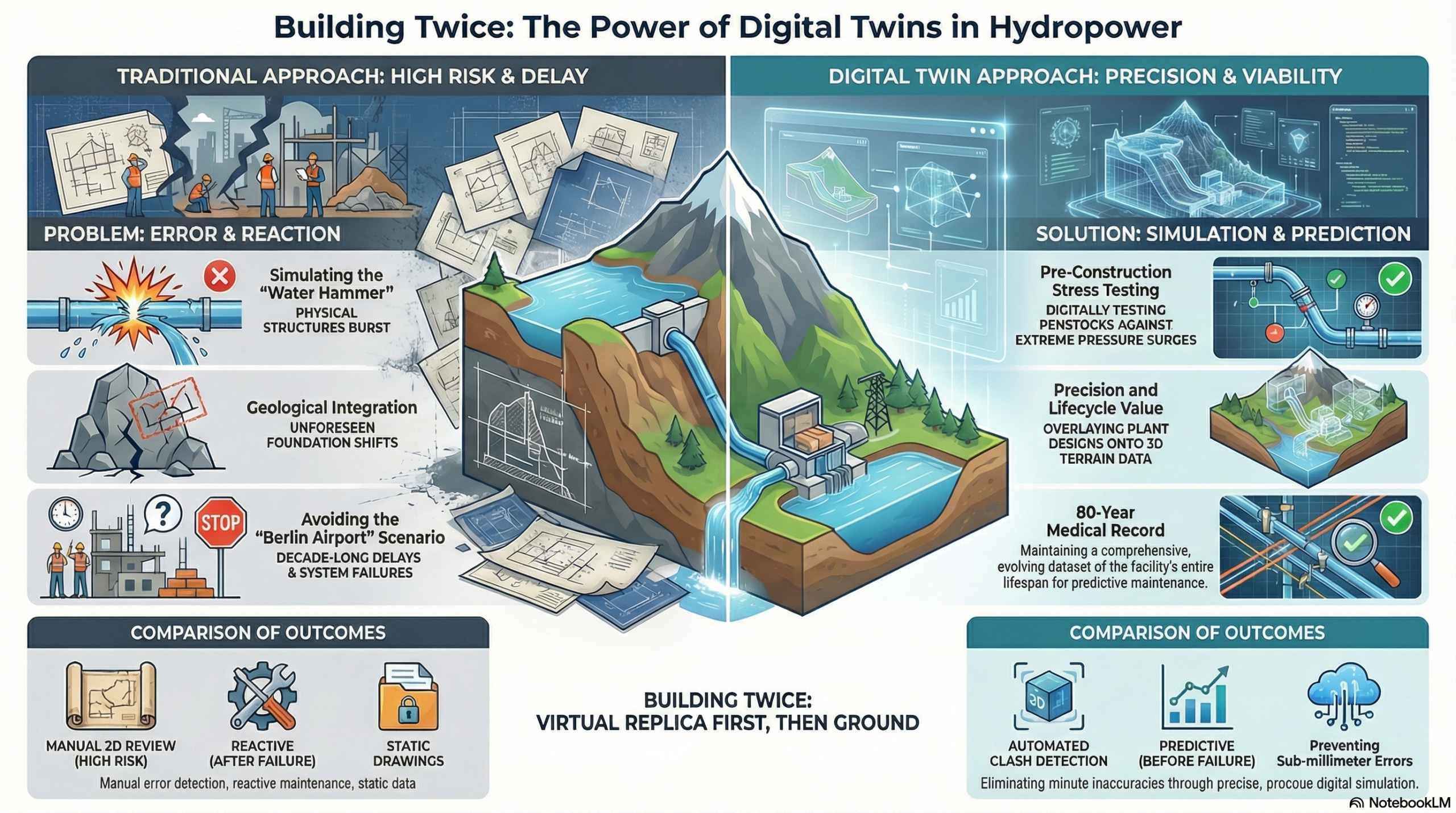
Digital Twins and Quality: Modeling the Future of your PSH
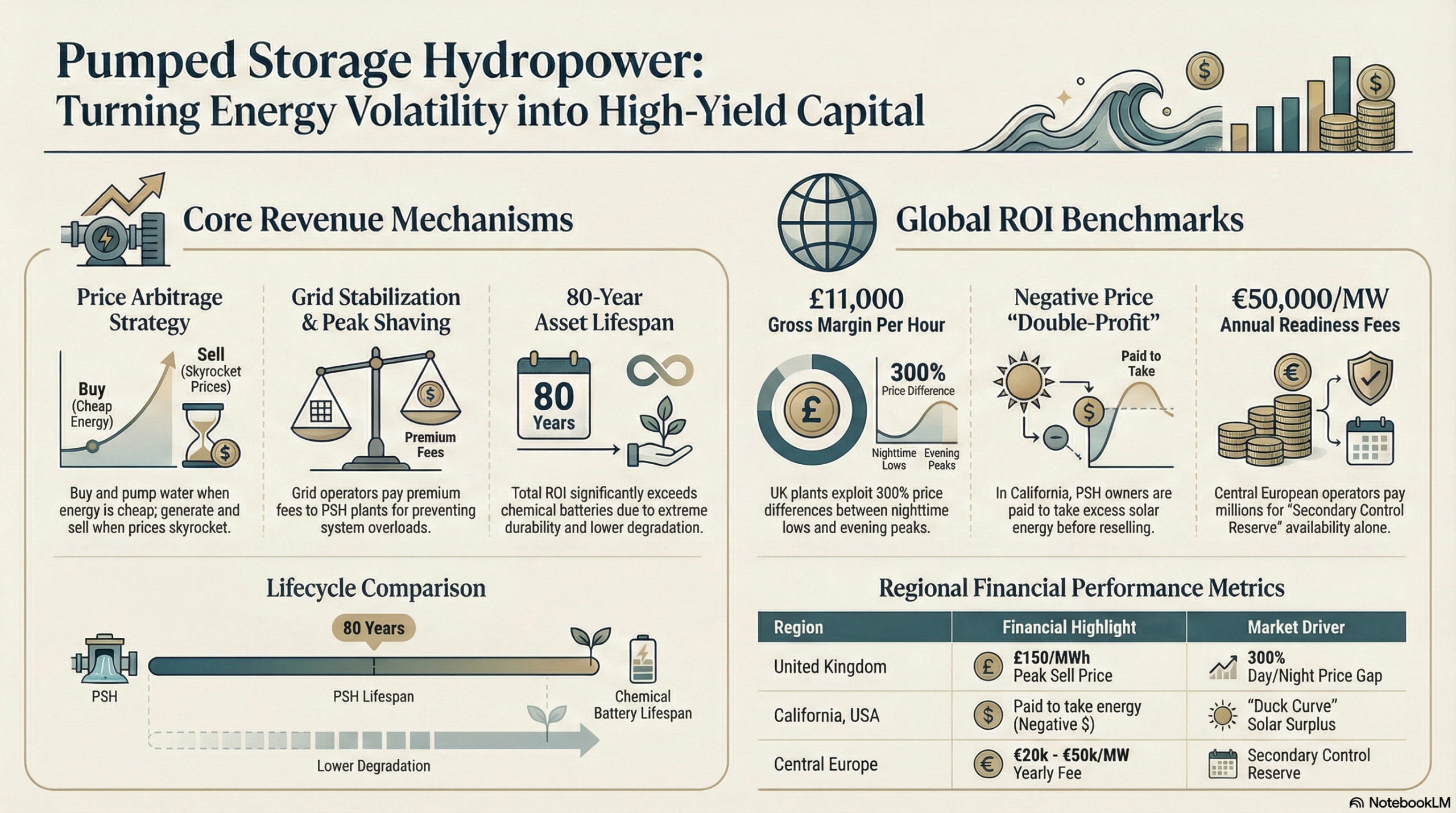
The ROI of Storage: How PSH Pays for Itself by Peak Shaving
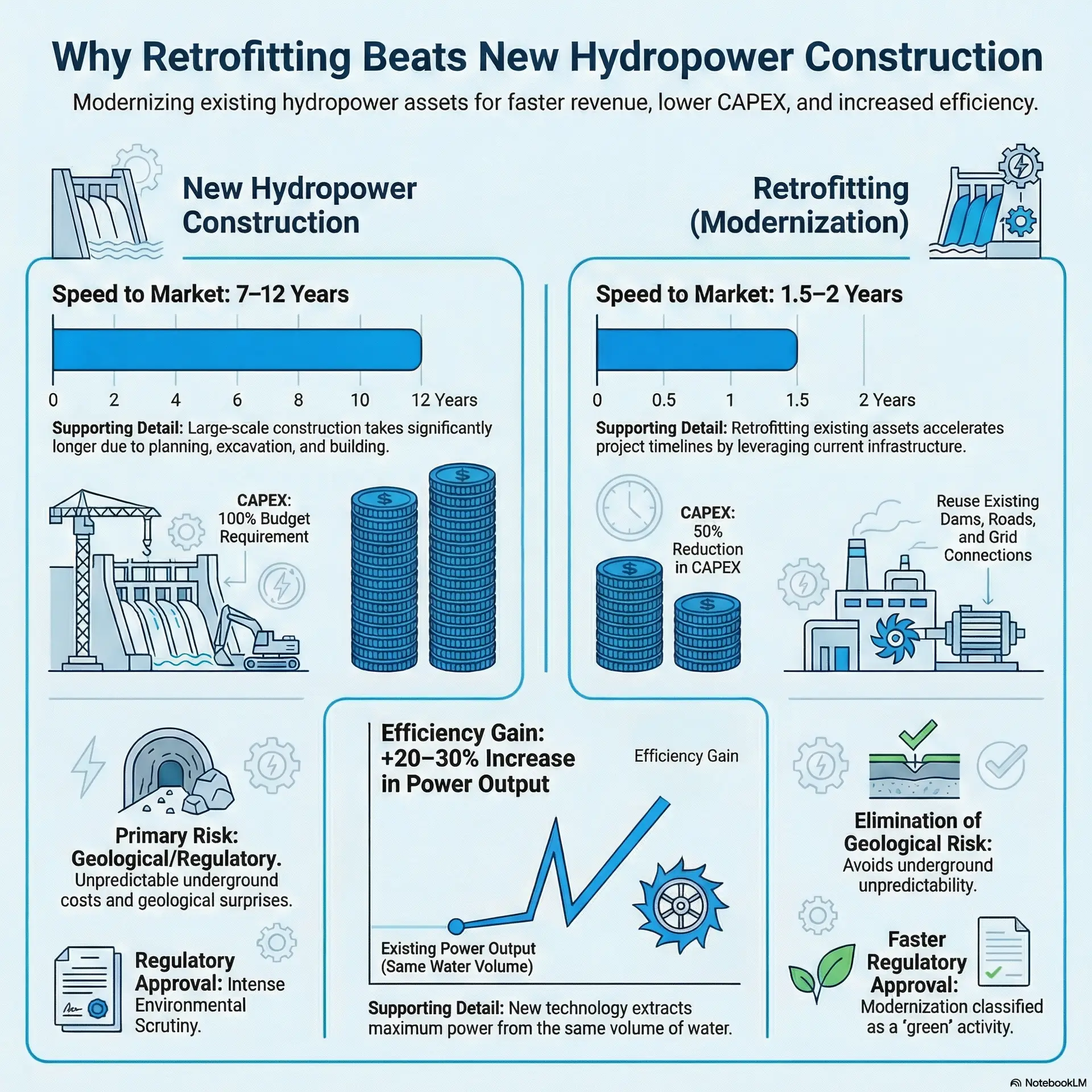
Retrofitting vs. New Build: Why Modernizing is the Best Business Choice