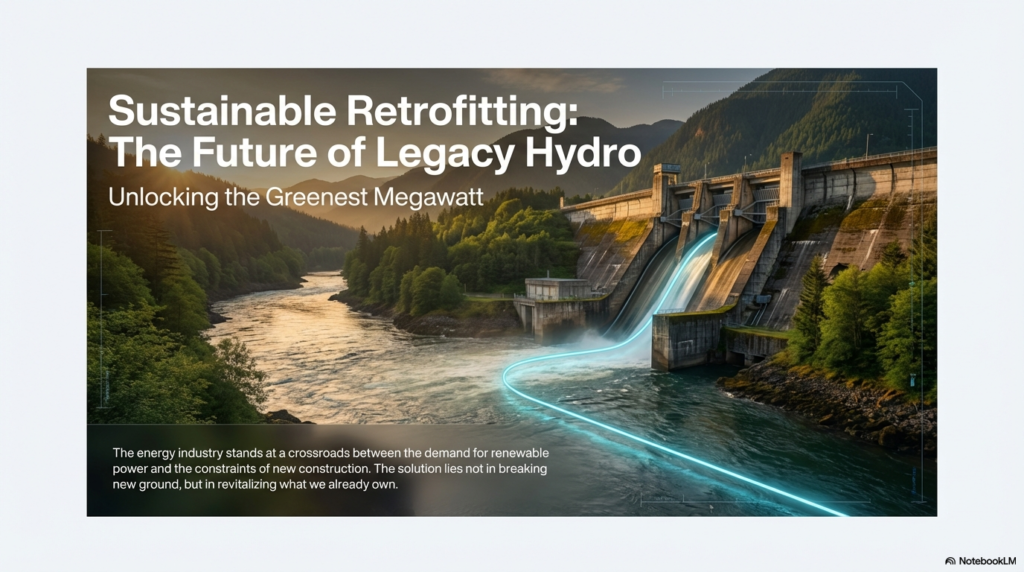
The Greenest Megawatt is Built Already
Building new dams often faces big hurdles. For example, environmental rules are very strict today. Sustainable Retrofitting is the best solution. It upgrades old hydro plants to modern standards. Furthermore, it increases power without flooding new lands. Consequently, we protect local ecosystems.
Eco-Engineering: Fish-Friendly Solutions
Traditional hydro plants can harm aquatic life. However, modern engineering has a fix. We use fish-friendly turbine runners now. These designs have better blade shapes. Therefore, fish pass through the system safely. This technology helps you comply with global regulations. In addition, it improves your brand image.
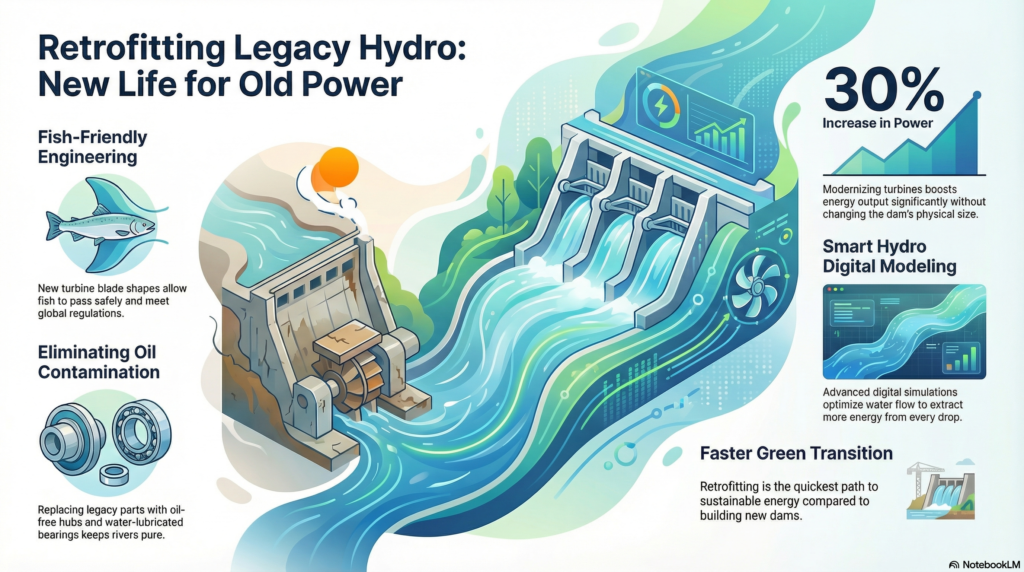
Up to 30% More Power: Unlock hidden capacity in your old plant.
Modern ROI: Higher efficiency with lower maintenance costs.
Smart Engineering: 21st-century tech for legacy infrastructure.
Eliminating Oil Contamination
Legacy plants often leak oil into the river. We must eliminate this risk. For this reason, we install oil-free Kaplan hubs. We also use water-lubricated bearings. This shift ensures the river remains pure. Moreover, it reduces your long-term maintenance costs.
Efficiency and Sustainability
Sustainability and profit can work together. For instance, we use digital modeling to optimize water flow. As a result, we get more energy from every drop. This «Smart Hydro» approach ensures a higher Return on Investment (ROI). Consequently, the carbon footprint per kilowatt-hour drops significantly.
Conclusion: A Win-Win Solution
Retrofitting is a bridge to the future. It preserves old assets. Also, it transforms them into clean generators. In short, it is a win for both investors and the planet.
Did You Know?
The Greenest Megawatt is Built Already
Building new dams often faces big hurdles. For example, environmental rules are very strict today. Sustainable Retrofitting is the best solution. It upgrades old hydro plants to modern standards. Furthermore, it increases power without flooding new lands. Consequently, we protect local ecosystems.
Eco-Engineering: Fish-Friendly Solutions
Traditional hydro plants can harm aquatic life. However, modern engineering has a fix. We use fish-friendly turbine runners now. These designs have better blade shapes. Therefore, fish pass through the system safely. This technology helps you comply with global regulations. In addition, it improves your brand image.
Eliminating Oil Contamination
Legacy plants often leak oil into the river. We must eliminate this risk. For this reason, we install oil-free Kaplan hubs. We also use water-lubricated bearings. This shift ensures the river remains pure. Moreover, it reduces your long-term maintenance costs.
Efficiency and Sustainability
Sustainability and profit can work together. For instance, we use digital modeling to optimize water flow. As a result, we get more energy from every drop. This «Smart Hydro» approach ensures a higher Return on Investment (ROI). Consequently, the carbon footprint per kilowatt-hour drops significantly.
Conclusion: A Win-Win Solution
Retrofitting is a bridge to the future. It preserves old assets. Also, it transforms them into clean generators. In short, it is a win for both investors and the planet.
Did You Know?
Modernizing a turbine can increase power by 30%. Moreover, you do not need to change the dam’s size. It is the fastest path to a green energy transition.

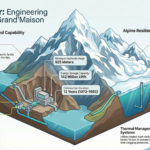
Alpine Power: Managing Water Resources in Mountainous Terrains
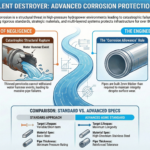
Anti-Corrosion Standards: Protecting Metal Structures in Extreme Environments
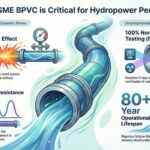
ASME BPVC: The Backbone of High-Pressure Penstocks
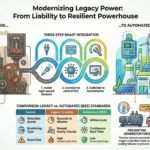
Automated Safety: Meeting IEEE Standards in Legacy Power Plants
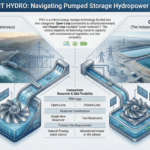
Closed-Loop vs Open-Loop: Which Storage System Fits Your Land?