Quality Standards

This section presents world-class construction standards. We design and build hydropower plants according to strict international codes (ASME, IEEE, ASTM). This ensures your station is safe and reliable for 100 years. We are open to cooperation: if you need a project audit for global compliance, we are ready to consult, calculate everything, and visit your site.

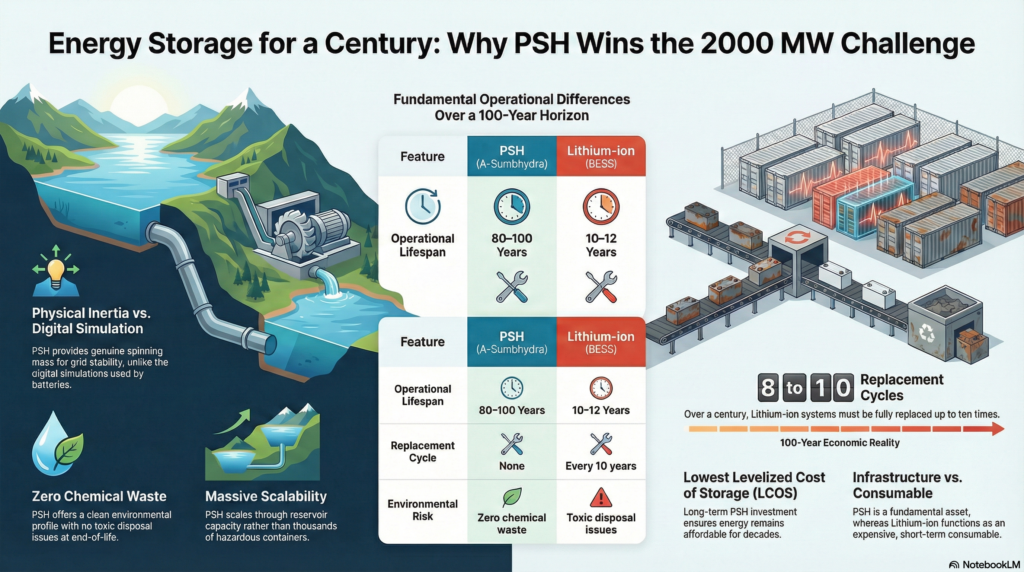
Energy Storage System for a Century: Why Scale and Longevity Matter

In the modern energy landscape, choosing the right Energy Storage System (ESS) for a 2000 MW project is a decision that defines grid stability for the next 100 years. While lithium-ion batteries are popular for small-scale tasks, large-scale industrial infrastructure requires a more robust and cost-effective solution: Pumped Storage Hydropower (PSH). The 2000 MW Challenge: […]

Energy Storage System for a Century: Why Scale and Longevity Matter Читать далее »
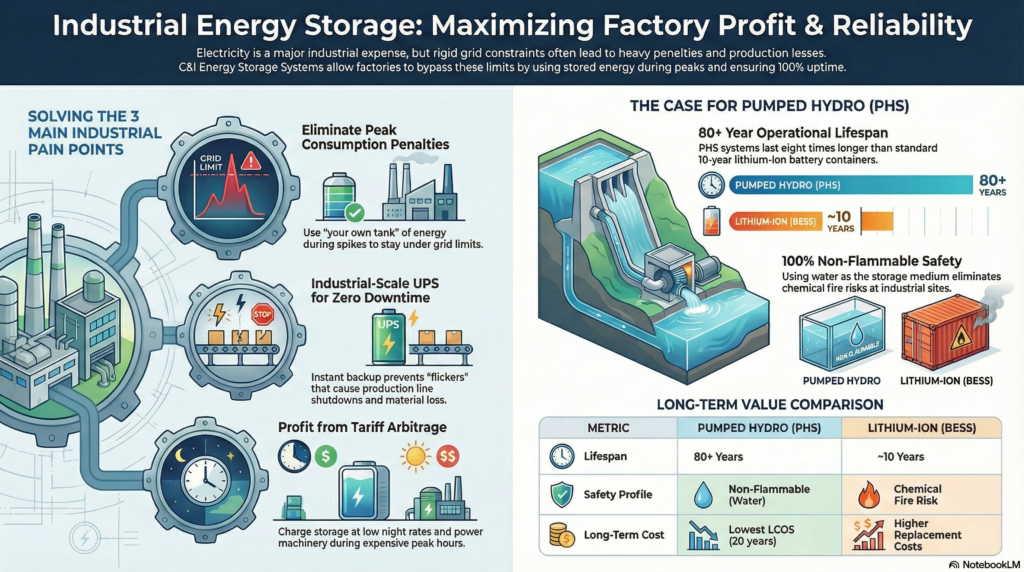
Commercial & Industrial Energy Storage: How Factories Save Millions with Storage Systems

In the modern industrial sector, electricity is one of the largest operational expenses. However, the problem isn’t just the price per kWh; it’s the rigid constraints of the power grid. Factory directors are increasingly turning to Commercial & Industrial (C&I) Energy Storage Systems to stop being dependent on penalties and power outages. Three Main Pain

Commercial & Industrial Energy Storage: How Factories Save Millions with Storage Systems Читать далее »

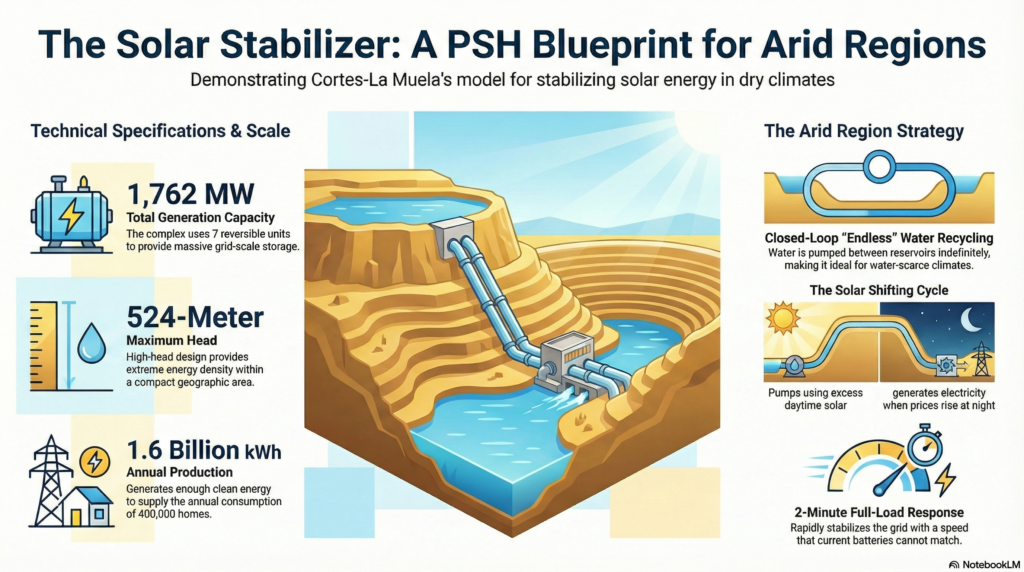
Desert Energy Buffer: PSH Solutions for Arid and Solar-Rich Regions

The Solar Stabilizer In the sun-drenched landscape of Valencia, Spain, lies Cortes-La Muela, the largest pumped storage hydropower (PSH) complex in the Mediterranean. With a total capacity of 1,762 MW, it serves as the ultimate «energy buffer» for a grid dominated by solar and wind power. At Hydro News, we analyze how this Spanish marvel

Desert Energy Buffer: PSH Solutions for Arid and Solar-Rich Regions Читать далее »

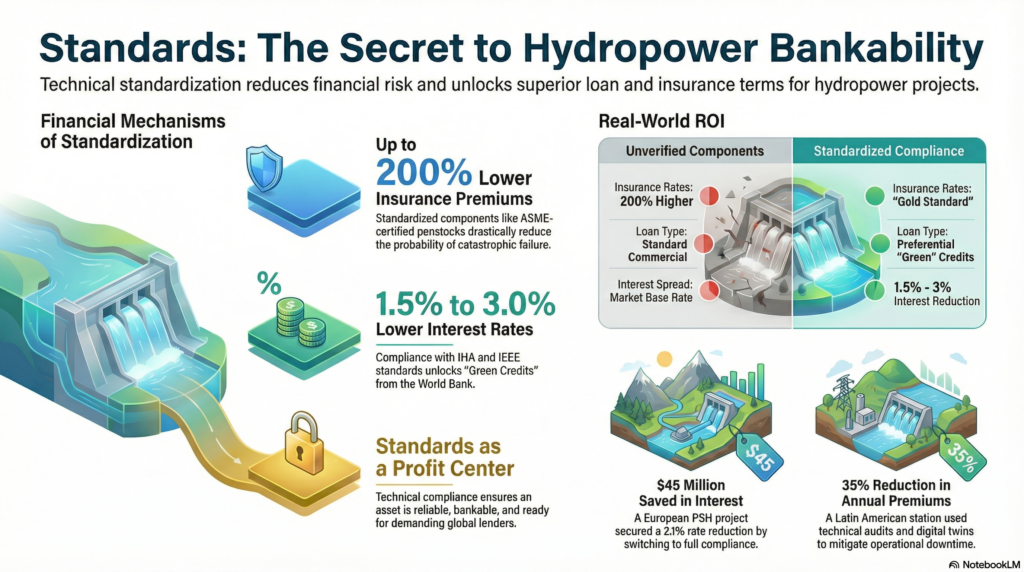
Standardization as a Tool to Reduce Insurance and Loan Costs

Why Banks Love Standards Financial institutions view hydropower projects through the lens of risk management. Therefore, technical standardization is your most powerful financial tool. When you follow global protocols, you demonstrate that your asset is reliable. Consequently, lenders reward this stability with better financial terms. 1. Lowering Insurance Premiums Insurance companies calculate premiums based on

Standardization as a Tool to Reduce Insurance and Loan Costs Читать далее »

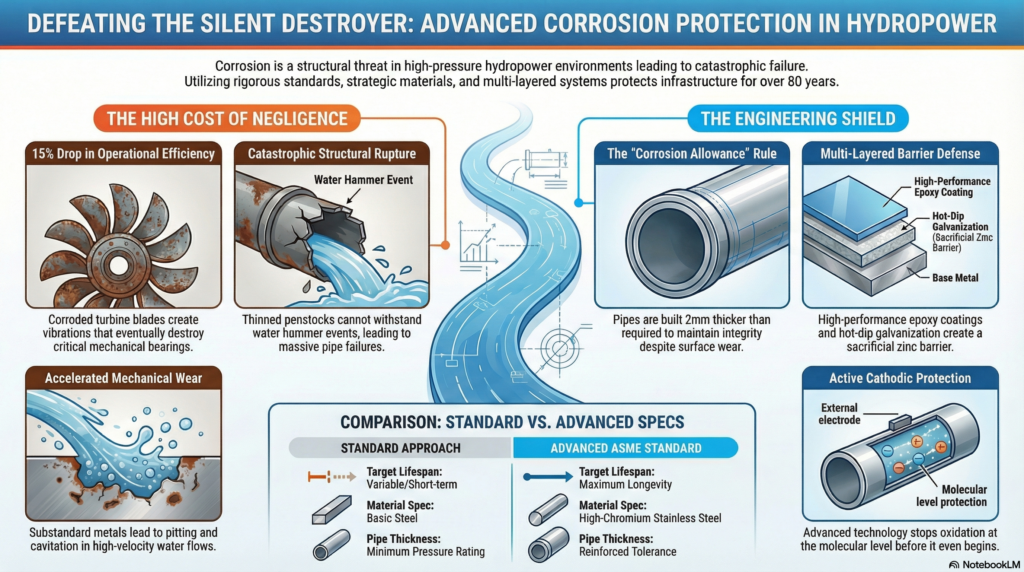
Anti-Corrosion Standards: Protecting Metal Structures in Extreme Environments

The Silent Destroyer of Infrastructure Corrosion acts as a hidden enemy for any hydropower project. In high-pressure environments, rust is not just an aesthetic issue but a serious structural threat. Therefore, at asumb, we apply rigorous international standards. This approach ensures that every metal component survives for over 80 years. 1. Choosing the Right Armor:

Anti-Corrosion Standards: Protecting Metal Structures in Extreme Environments Читать далее »

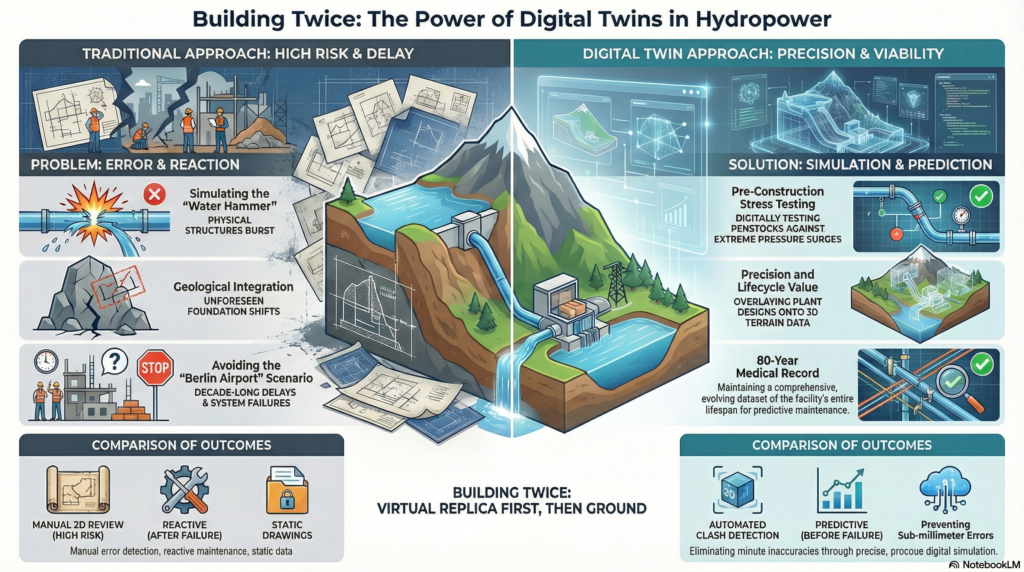
Digital Twins and Quality: Modeling the Future of your PSH

Why We Build the Station Twice In modern infrastructure, we never build a Pumped Storage Hydropower (PSH) plant once. We build it twice: first in a high-precision digital environment, and then on the ground. At asumb, we use Digital Twins—exact virtual replicas of your asset—to eliminate engineering conflicts before the first shovel of dirt is

Digital Twins and Quality: Modeling the Future of your PSH Читать далее »

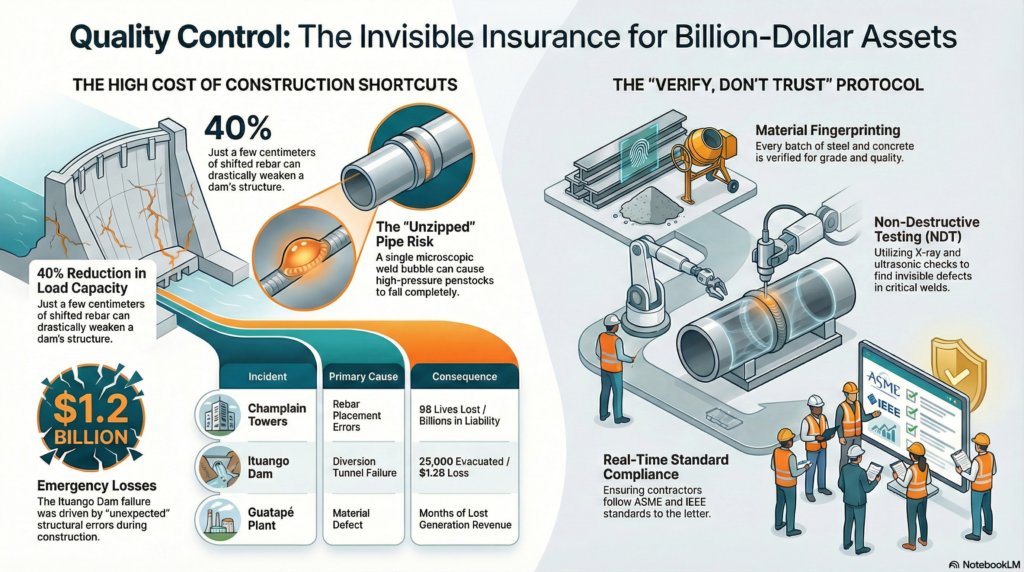
Quality Control During Construction: Why On-Site Inspection is Non-Negotiable

The Billion-Dollar Anchor You can have the most expensive engineering blueprints in the world, but if the site contractor uses the wrong grade of rebar or substandard cement, your billion-dollar asset becomes a liability. In hydropower, «close enough» is the recipe for disaster. At asumbhydro, we believe that quality control (QC) is not a bureaucratic

Quality Control During Construction: Why On-Site Inspection is Non-Negotiable Читать далее »

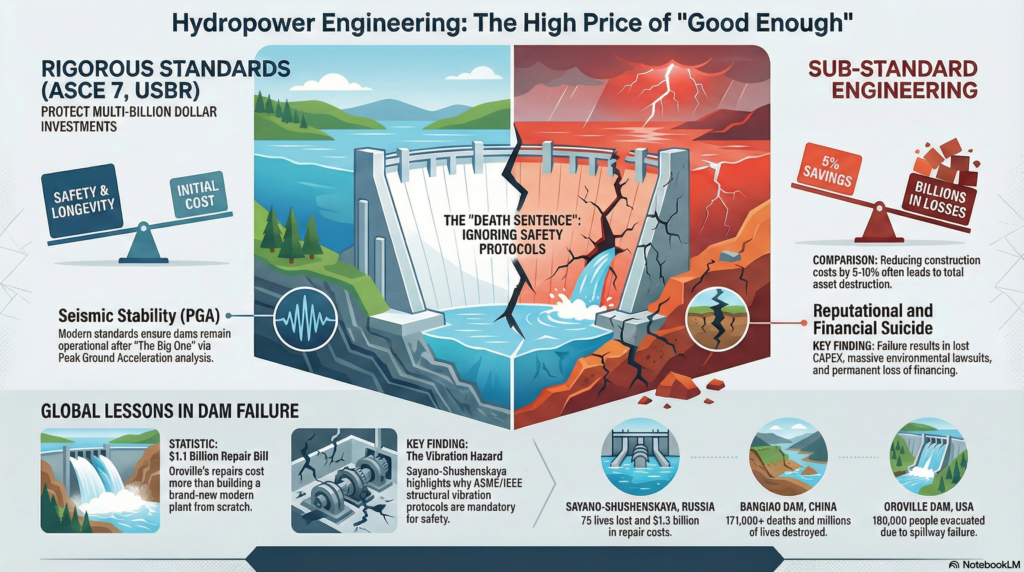
Safety First: Seismic Stability Standards for Modern Dams

The High Cost of Negligence In hydropower, «good enough» engineering is a death sentence. When a dam is built in a seismically active zone, following international standards like ASCE 7 or USBR (U.S. Bureau of Reclamation) guidelines is the only way to protect your investment. Ignoring these protocols to save 5-10% on construction costs can

Safety First: Seismic Stability Standards for Modern Dams Читать далее »

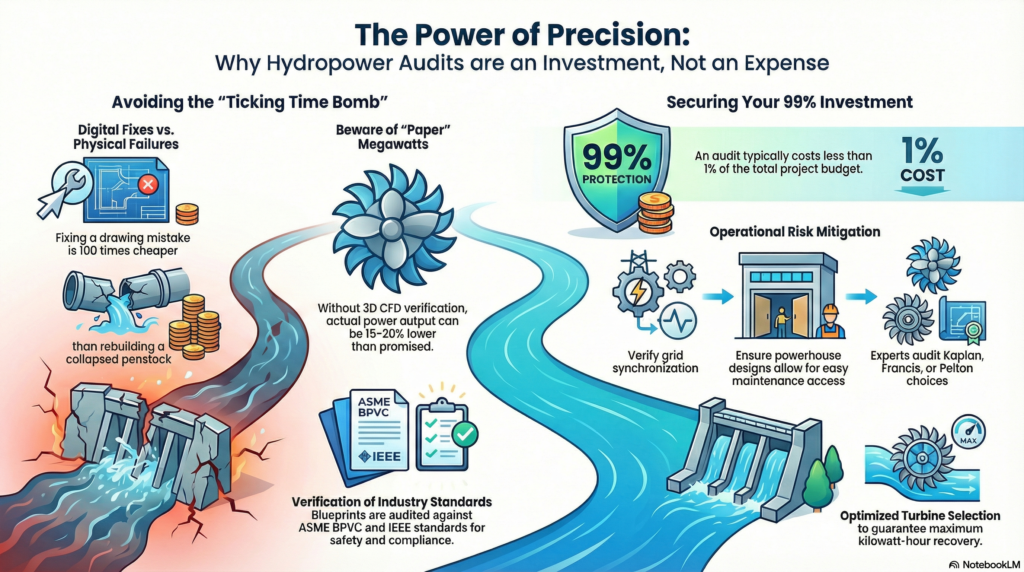
Technical Audit: How We Verify Third-Party Hydropower Projects

Why Audit is an Investment, Not an Expense Investors often view a technical audit as an additional cost. However, in the high-stakes world of hydropower, an unverified project is a ticking time bomb. At asumbhydro, our audit process is designed to find the «invisible» flaws that lead to 500% cost overruns or catastrophic failures. 1.

Technical Audit: How We Verify Third-Party Hydropower Projects Читать далее »

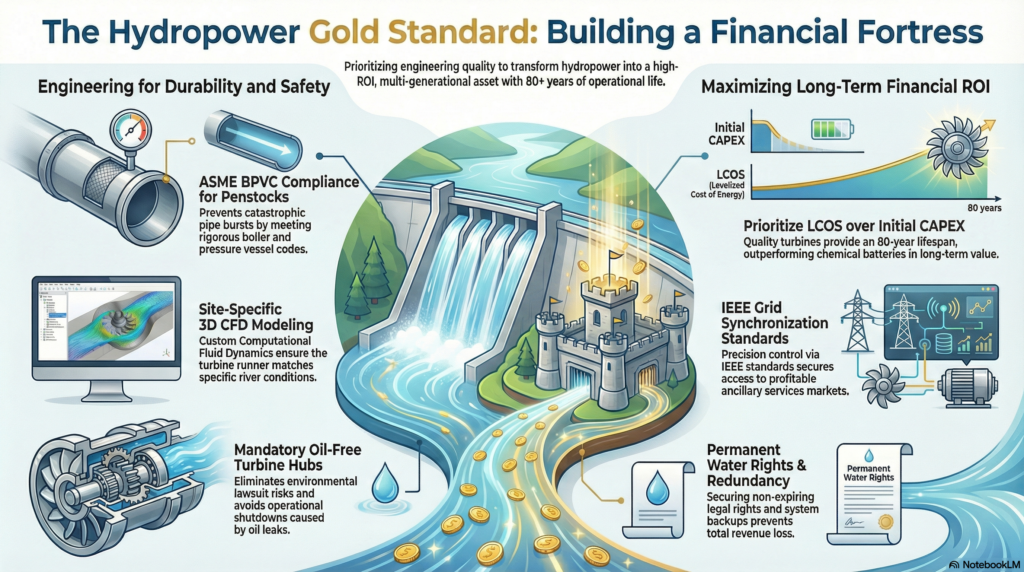
The Gold Standard: 7 Engineering Rules Every Investor Should Know

Engineering is Risk Management In hydropower, your ROI is buried in the quality of the engineering. A cheap project today is an expensive liability tomorrow. At asumbhydro, we follow the «Gold Standard»—a set of rules that transform a technical facility into a multi-generational financial fortress. Rule 1: Demand ASME BPVC for Penstocks The pipe is

The Gold Standard: 7 Engineering Rules Every Investor Should Know Читать далее »