
The Benchmark of European Storage
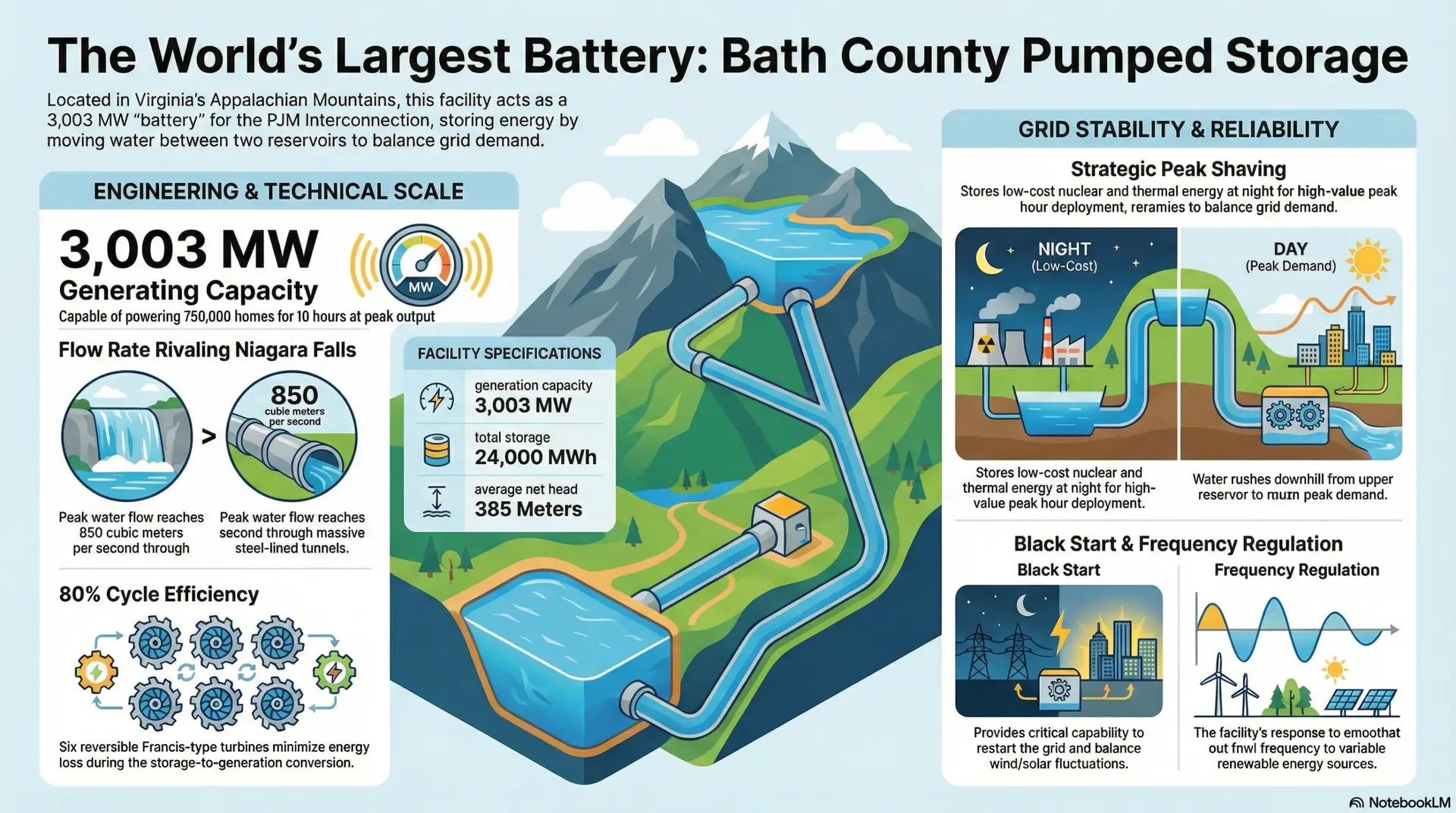
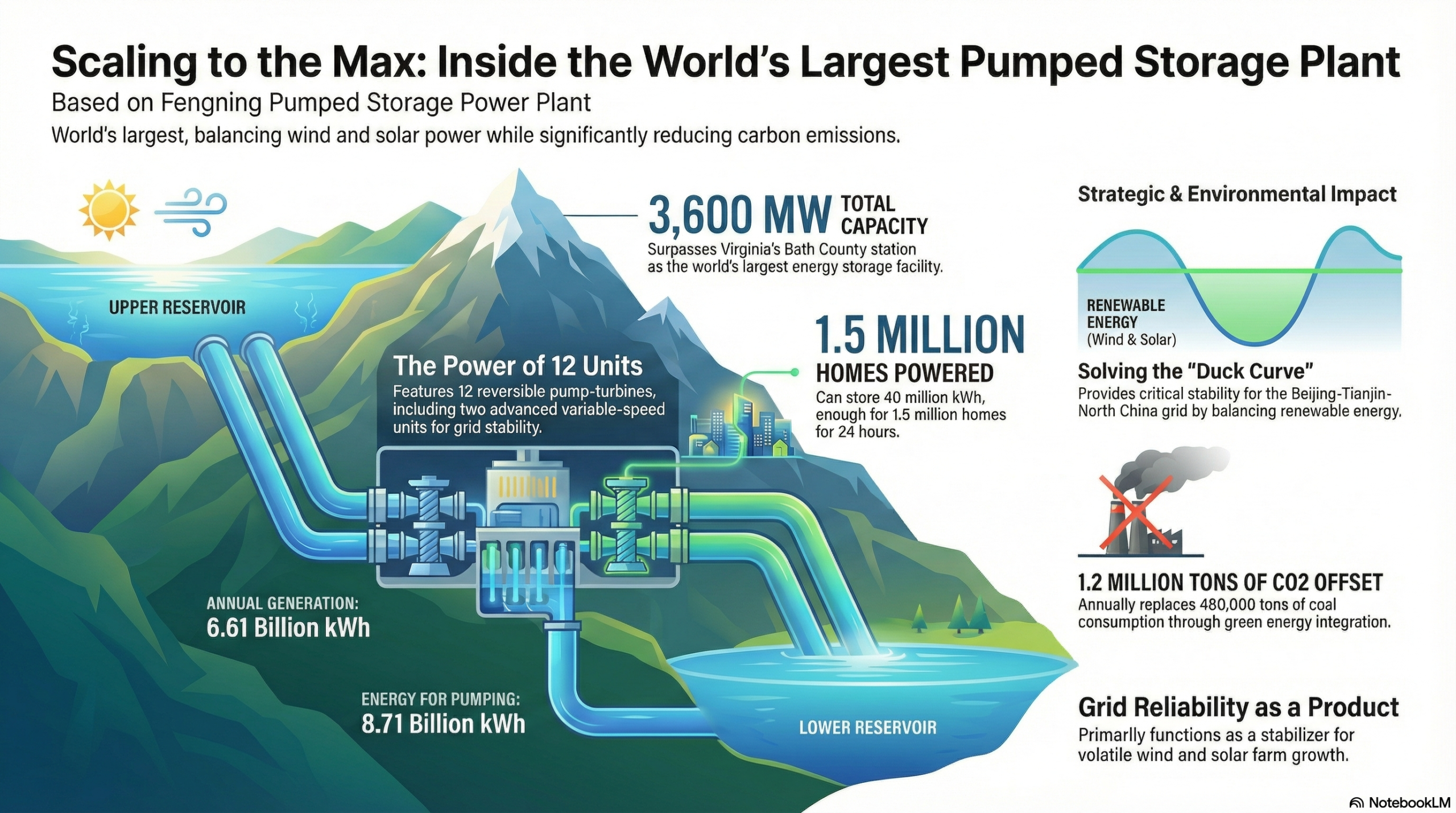
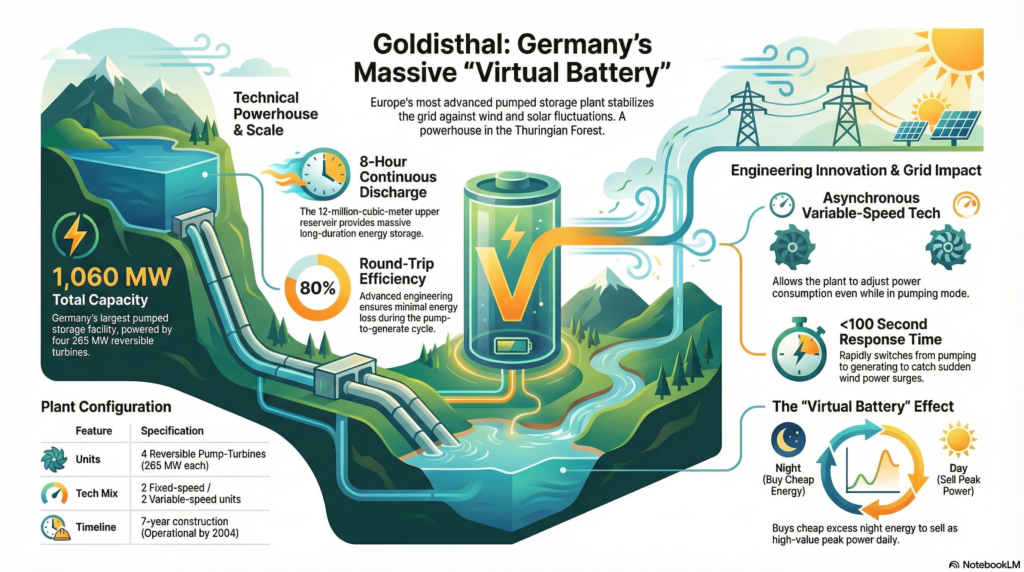
The Goldisthal Pumped Storage Plant, located in the Thuringian Forest, is the crown jewel of Germany’s renewable energy infrastructure. With a capacity of 1,060 MW, it is not only the largest in Germany but remains the most technologically advanced in Europe. At Hydro News, we explore how this plant sets the standard for efficiency and grid stability.
1. Technical Specifications: The Power Profile
Goldisthal was engineered to provide rapid response to grid fluctuations, a role that has become critical with Germany’s transition to wind and solar energy.
- Total Capacity: 1,060 MW.
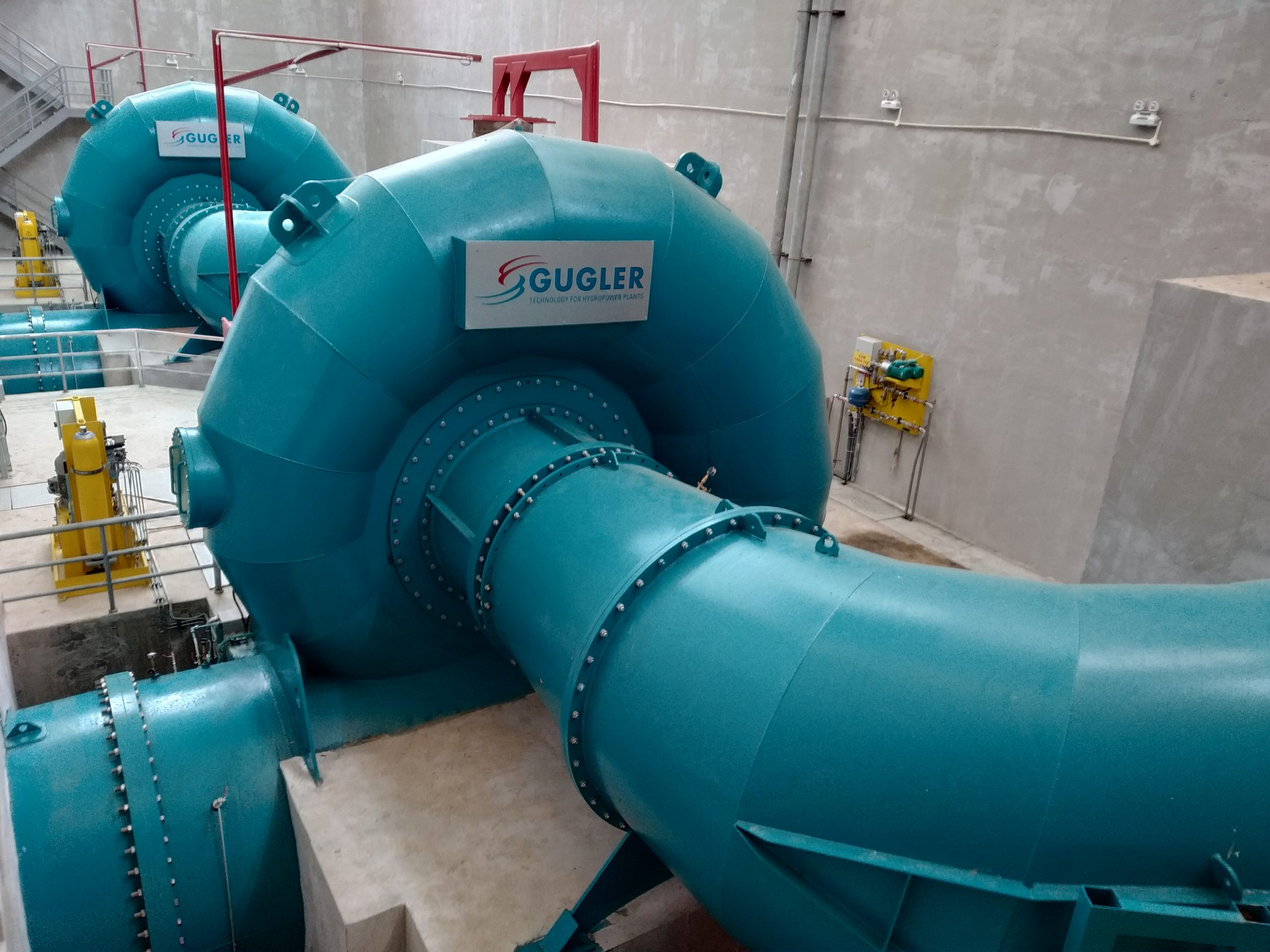
- Number of Units: 4 reversible pump-turbines (265 MW each).
- Construction Timeline: Started in 1997, fully operational by 2004. It took approximately 7 years to complete this massive underground project.
- Annual Generation: Approximately 1.6 billion kWh (1.6 TWh).
2. Engineering Innovation: The Asynchronous Advantage
Goldisthal is world-renowned for its use of asynchronous (variable-speed) motor-generators. Out of its four units, two are equipped with this technology.
- Operational Flexibility: Unlike traditional fixed-speed units, variable-speed units can adjust their power consumption even in pumping mode.
- Grid Stability: This allows the plant to provide frequency regulation with surgical precision. Specifically, it can compensate for the sudden drops or surges from North Sea wind farms.
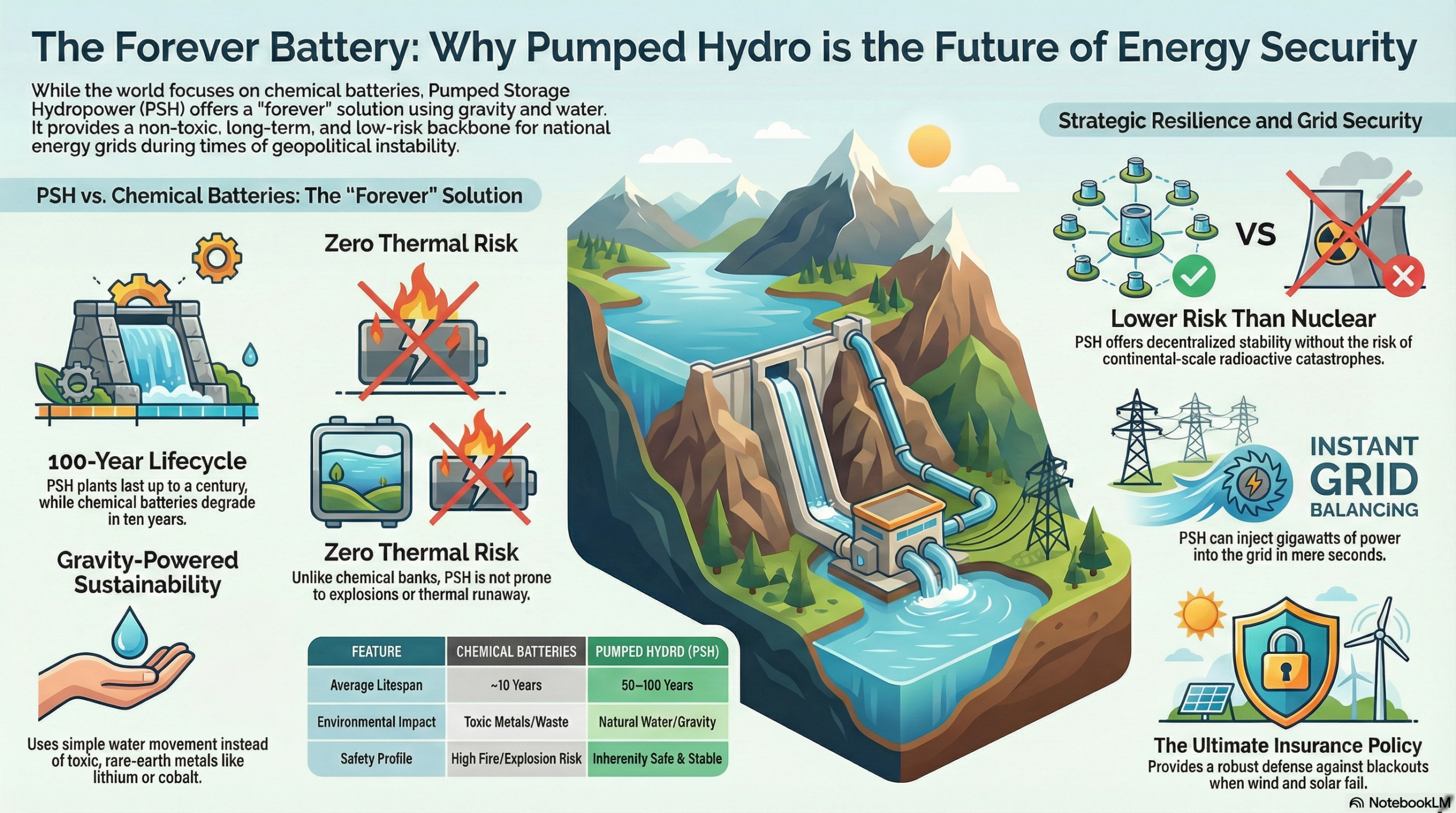
- Cycle Efficiency: The plant achieves an impressive round-trip efficiency of over 80%, meaning very little energy is lost during the pump-to-generate cycle.
3. Civil Engineering & Reservoir Specs
- Upper Reservoir: Holds 12 million cubic meters of water, situated 350 meters above the powerhouse.
- Discharge Duration: At full power, the plant can generate electricity for 8 consecutive hours.
- Underground Cavern: The powerhouse is hidden 150 meters below ground, housing the massive turbines and the world’s largest frequency converters for hydro applications.
4. Commercial Impact: The «Virtual Battery»
For the European energy market, Goldisthal acts as a massive «virtual battery.» Consequently, it allows operators to buy cheap excess wind energy at night to pump water up, and sell high-value peak power during the day. Clearly, its ability to switch from pumping to generating in under 100 seconds makes it a vital commercial asset for Vattenfall (the operator).
Conclusion: A Legacy of Excellence
Goldisthal proves that German engineering isn’t just about build quality; it’s about adaptability. Ultimately, as the world builds more PSH plants, the variable-speed model pioneered here remains the global standard for smart grid integration.
Submit details. Get custom technical calculations.
Submit your project details, and our engineering team will provide a comprehensive technical calculation. We analyze head, flow, and site conditions to ensure maximum efficiency for your future plant.