
Grid-Scale Energy Storage: The Foundation of National Energy Security

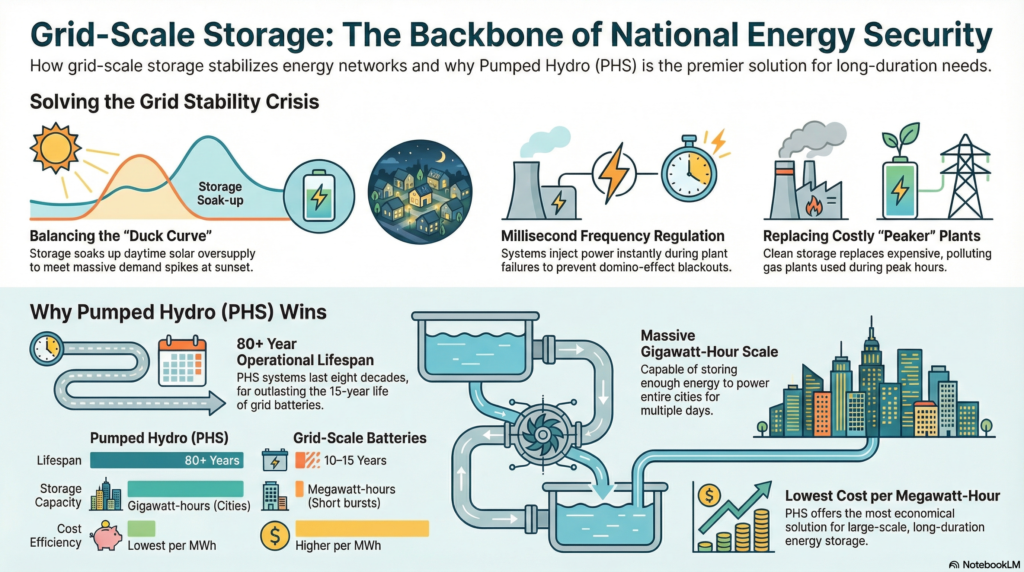
As the world transitions to renewable energy, the primary challenge is no longer generation, but stability. Wind and solar are intermittent, creating «gaps» in the national grid. Grid-scale energy storage is the only solution to bridge these gaps and prevent total blackouts.

Why the World is Betting on Grid-Scale Storage

1. Balancing the «Duck Curve» (Example: California & Kazakhstan)

In regions with high solar penetration, there is an oversupply of energy during the day and a massive spike in demand at sunset.

  • The Example: In California, solar generates so much power at noon that prices turn negative. Without storage, this energy is wasted. Grid-scale Pumped Hydro Storage (PHS) acts as a giant «sponge,» soaking up this excess and releasing it when the sun goes down, stabilizing the entire state’s grid.

2. Frequency Regulation (Example: South Australia)

Grid frequency must remain stable (50Hz or 60Hz). If a large power plant fails, the frequency drops, leading to a domino effect of shutdowns.

  • The Example: When a major coal plant in Australia tripped unexpectedly, grid-scale storage systems responded in milliseconds, injecting power into the grid and saving the region from a massive blackout that would have cost the economy billions.

3. Replacing «Peaker» Plants (Example: Future of Almaty Region)

Traditionally, cities use expensive and polluting gas plants to cover peak loads.

  • The Example: Instead of building a new gas turbine near Almaty, a 250 MW Pumped Hydro Station (like the one proposed near Kapchagay) can provide the same power more cleanly. It stores cheap night-time energy and delivers it during peak hours, reducing the cost of electricity for the entire population.

Why Pumped Hydro (PHS) Wins the Grid-Scale Race

While batteries are good for short bursts, Pumped Hydro is the king of Long-Duration Energy Storage (LDES):

  • Scale: Can store gigawatt-hours of energy (enough to power a city for days).
  • Longevity: Operates for 80+ years, while grid-scale batteries degrade in 10-15 years.
  • Cost: Lowest cost per MWh for large-scale, long-term storage.
Quality Standards

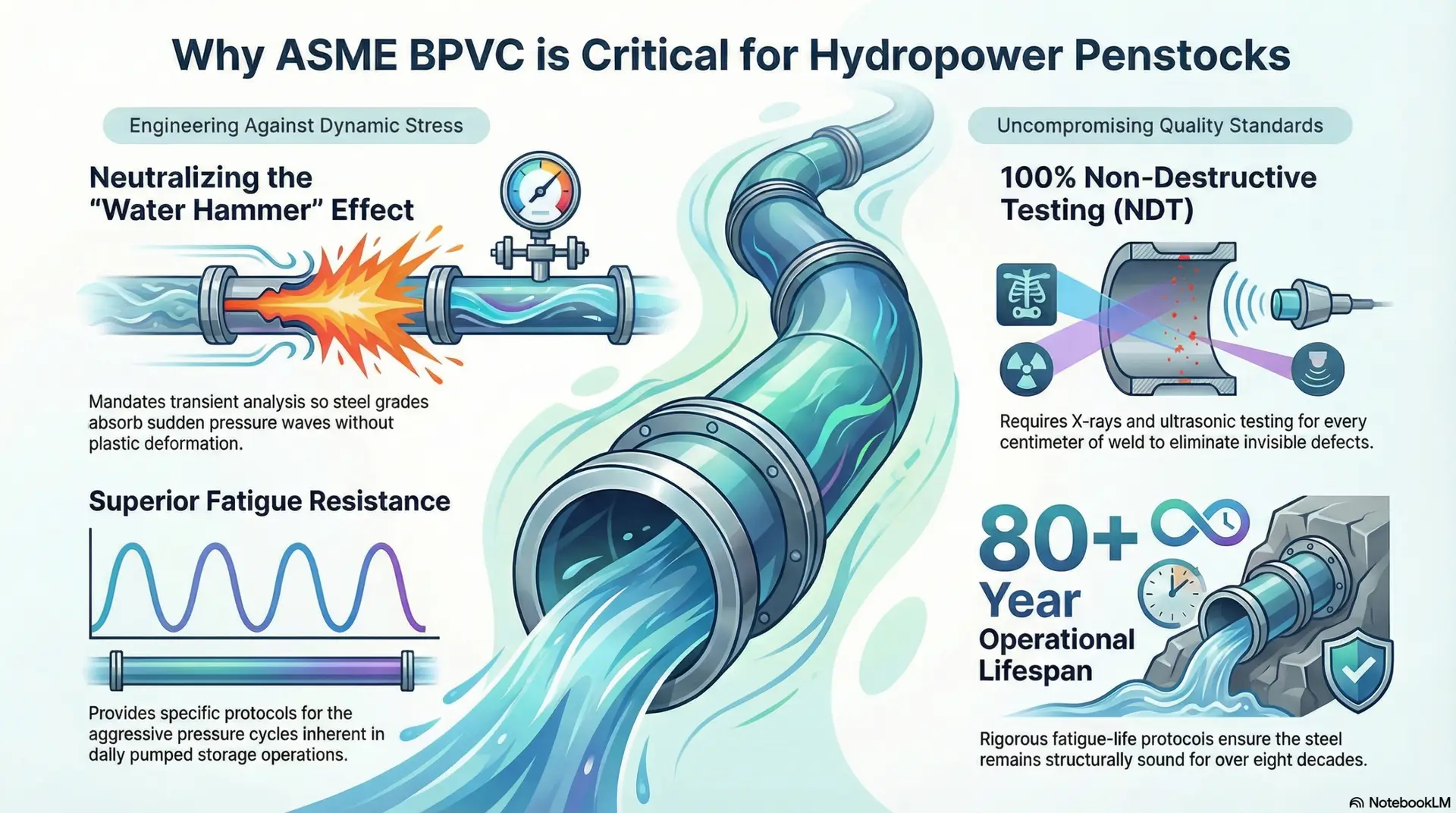
ASME BPVC: The Backbone of High-Pressure Penstocks

Why ASME Codes Prevent Pipe Failure In hydropower and pumped storage (PSH), penstocks are the arteries of the plant. They endure massive pressure, and any ...
Read More →
Land & Sites

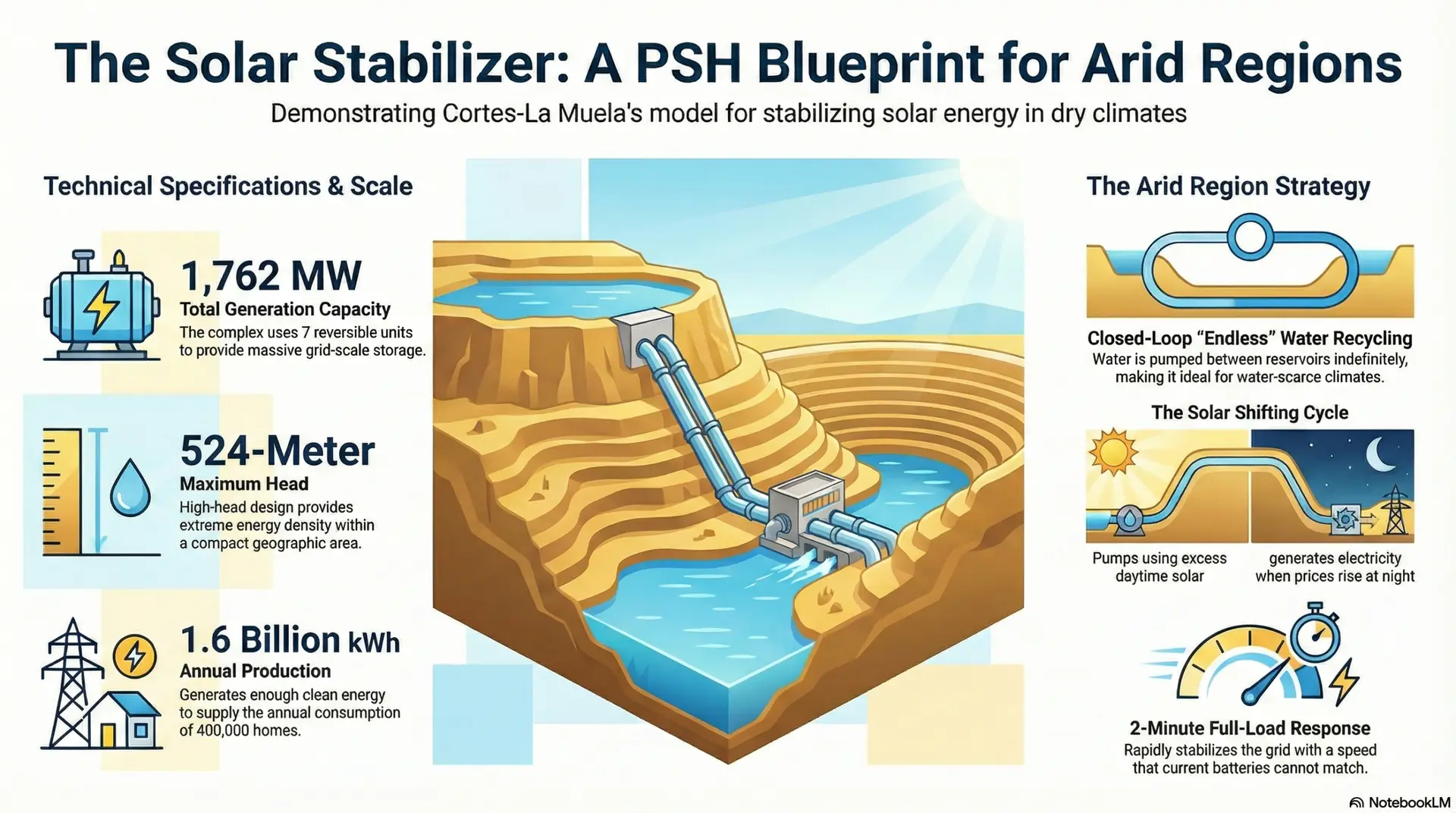
Desert Energy Buffer: PSH Solutions for Arid and Solar-Rich Regions

The Solar Stabilizer In the sun-drenched landscape of Valencia, Spain, lies Cortes-La Muela, the largest pumped storage hydropower (PSH) complex in the Mediterranean. With a ...
Read More →
Storage

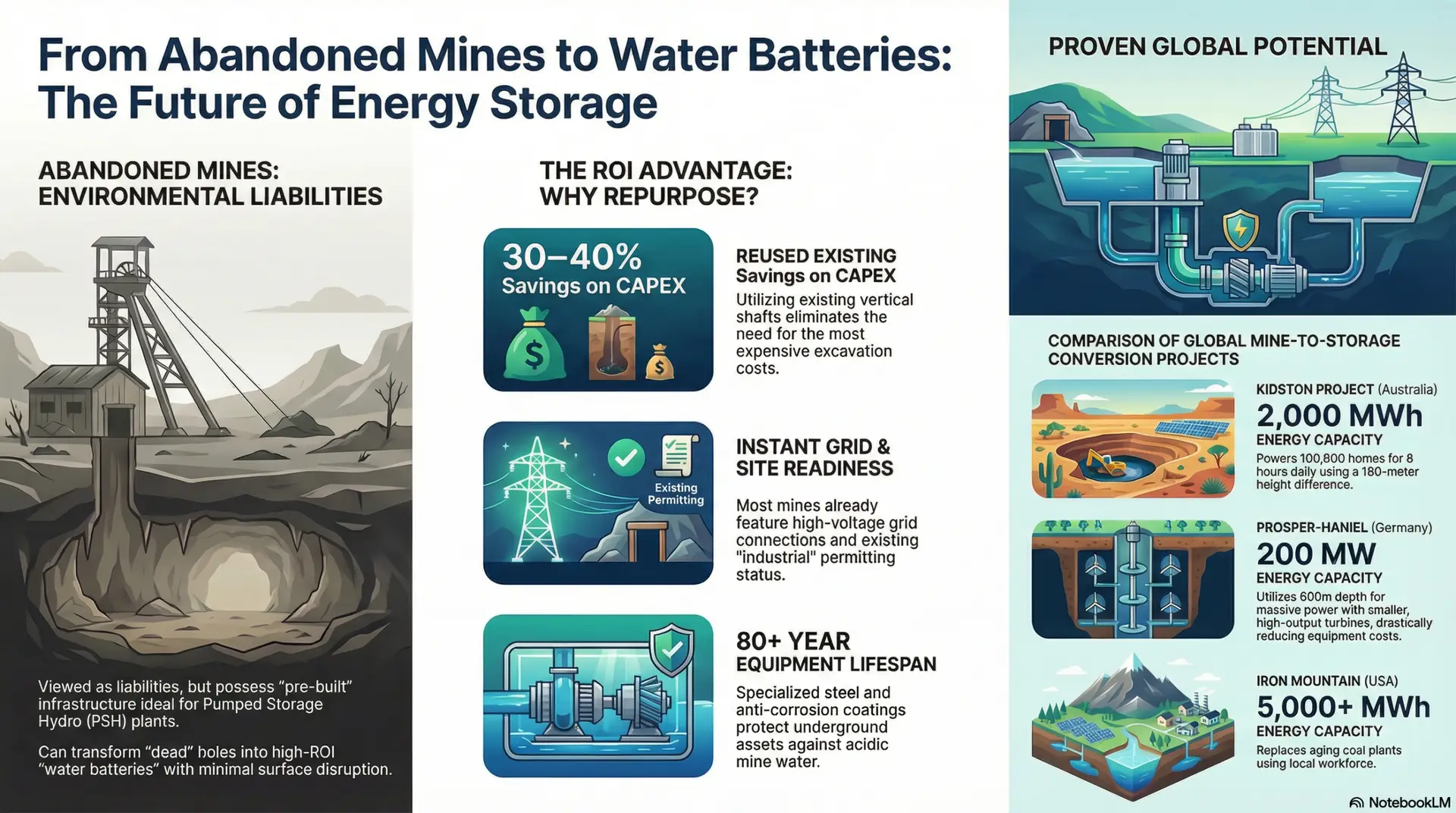
Turning Abandoned Mines into High-Value Energy Storage

From Liabilities to Assets Old mines are often seen as environmental liabilities. However, for a smart investor, an abandoned mine is a «pre-built» infrastructure for ...
Read More →
Land & Sites

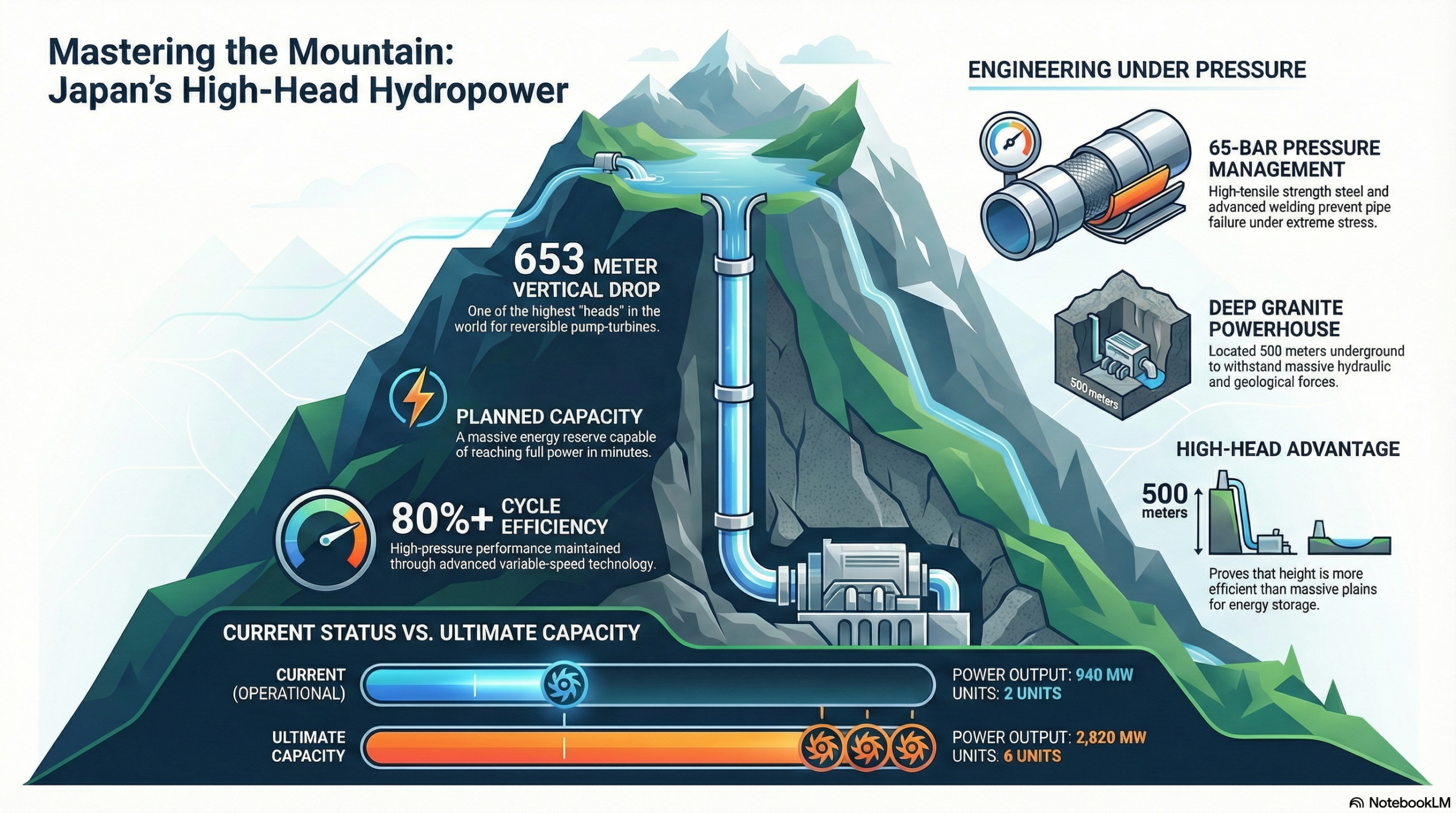
High-Head Engineering: How Japan Mastered Mountain Hydropower

Defying Gravity In the world of pumped storage, Head (the vertical drop) is power. The Kannagawa Pumped Storage Power Plant, located in the Gunma Prefecture, ...
Read More →
Resource Center

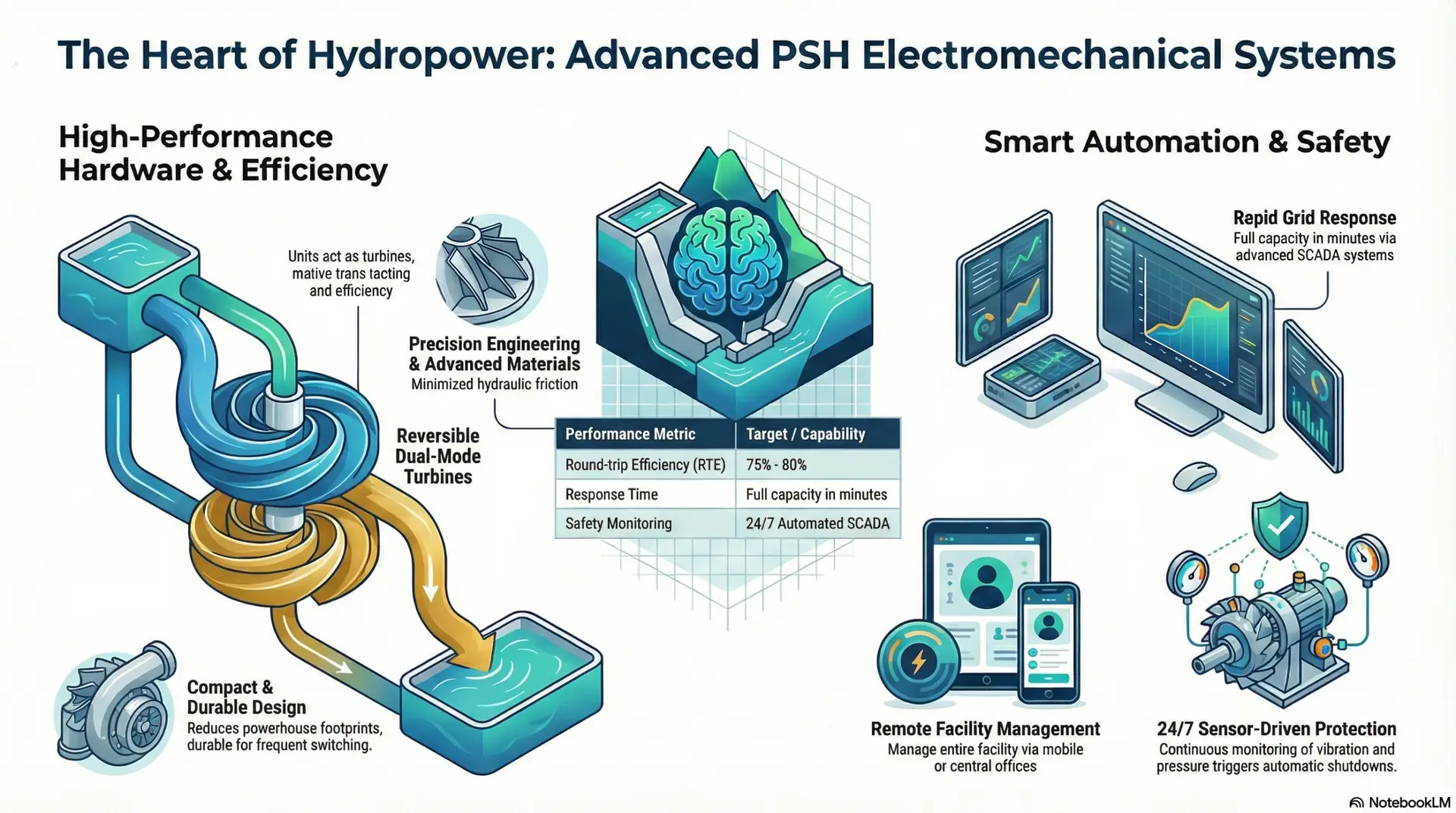
Electromechanical Equipment: The Heart of the Hydropower Plant

The core of any Pumped Storage Hydropower (PSH) project is its electromechanical system. This is where hydraulic energy transforms into electricity. At ASUMB, we provide ...
Read More →
Storage

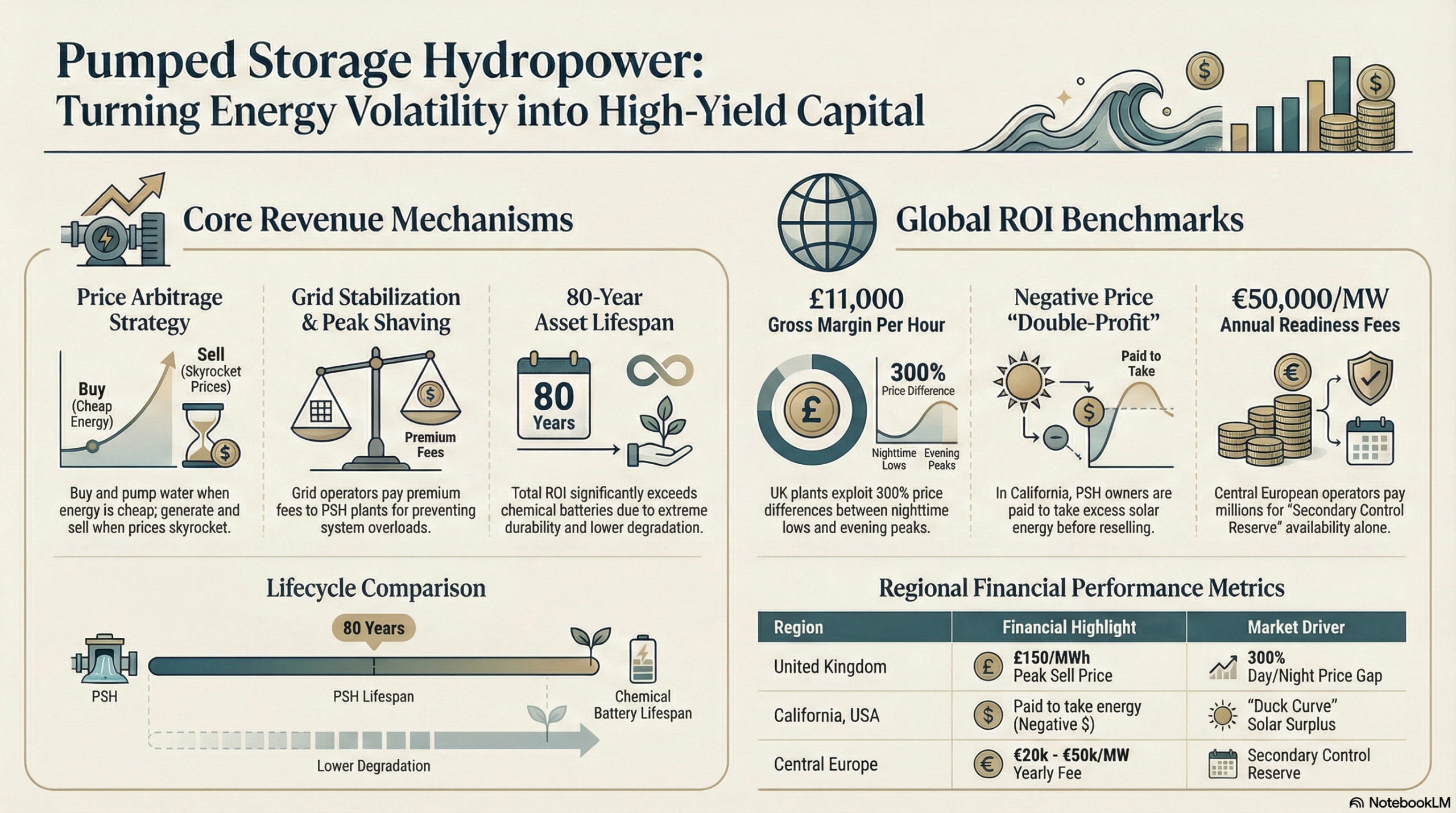
The ROI of Storage: How PSH Pays for Itself by Peak Shaving

Turning Time into Money Electricity prices are not constant. Instead, they fluctuate wildly based on the time of day. Pumped Storage Hydropower (PSH) allows investors ...

Read More →

Submit details. Get custom technical calculations.

Submit your project details, and our engineering team will provide a comprehensive technical calculation. We analyze head, flow, and site conditions to ensure maximum efficiency for your future plant.

HydroNews