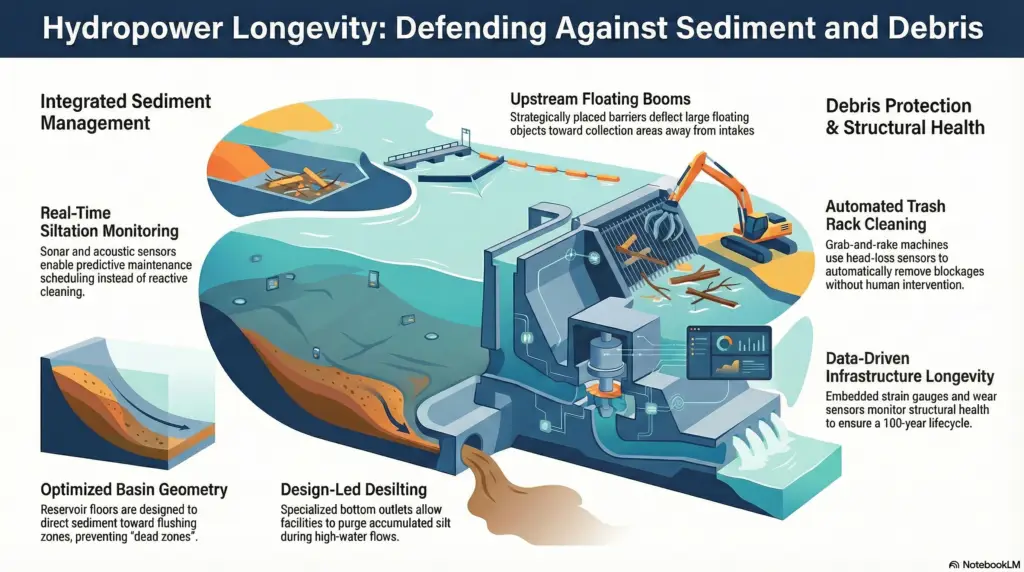
Long-term efficiency in hydropower is not just about power generation; it is about protecting the system from natural degradation. Sedimentation and floating debris are the two primary «silent» threats that can reduce reservoir capacity and damage turbines. ASUMB focuses on proactive maintenance engineering to minimize downtime and prevent costly mechanical failures.
1. Integrated Sediment Management
Every river and reservoir system faces the challenge of siltation. Over time, accumulated silt and sand reduce the active storage volume of the basins and can enter the intake, causing severe wear on the mechanical components.
- Design-Led Desilting: We design specialized bottom outlets (low-level pipes) specifically for sediment flushing. This allows the facility to «purge» accumulated silt during periods of high water flow.
- Siltation Monitoring: Implementation of sonar and acoustic sensors in the lower basin to monitor sediment levels in real-time. This allows for predictive maintenance scheduling rather than reactive cleaning.
- Basin Geometry: Optimization of the reservoir floor design to direct sediment toward flushing zones, preventing «dead zones» where silt could accumulate and become impossible to remove.
2. Advanced Debris Protection
Floating debris—such as branches, vegetation, and plastic—poses a constant risk to the intake structures. If trash racks become clogged, the resulting pressure differential can cause them to collapse or starve the turbines of water.
- Automated Trash Rack Cleaning Machines (TRCM): We implement fully automated «grab-and-rake» systems that traverse the intake deck. These machines detect blockages via head-loss sensors and automatically remove debris without human intervention.
- Floating Booms: Strategically placed barriers upstream of the intake to deflect large floating objects toward a collection area, keeping the immediate intake zone clear.
3. Infrastructure Longevity and Monitoring
Maintenance at asumbhydro.com is driven by data. Operational reliability is ensured through a combination of robust mechanical design and modern digital oversight.
- Corrosion and Wear Sensors: Real-time monitoring of turbine components to detect the earliest signs of material loss from cavitation or abrasion.
- Structural Health Monitoring (SHM): Piezometers and strain gauges embedded in the dam and tunnels provide continuous data on the structural integrity of the entire complex.
Conclusion
Operational reliability is the difference between a project that lasts 20 years and one that lasts 100. By integrating sediment flushing and automated cleaning systems from Day 1, ASUMB ensures that the hydropower facility remains an efficient, low-maintenance asset for its entire lifecycle.
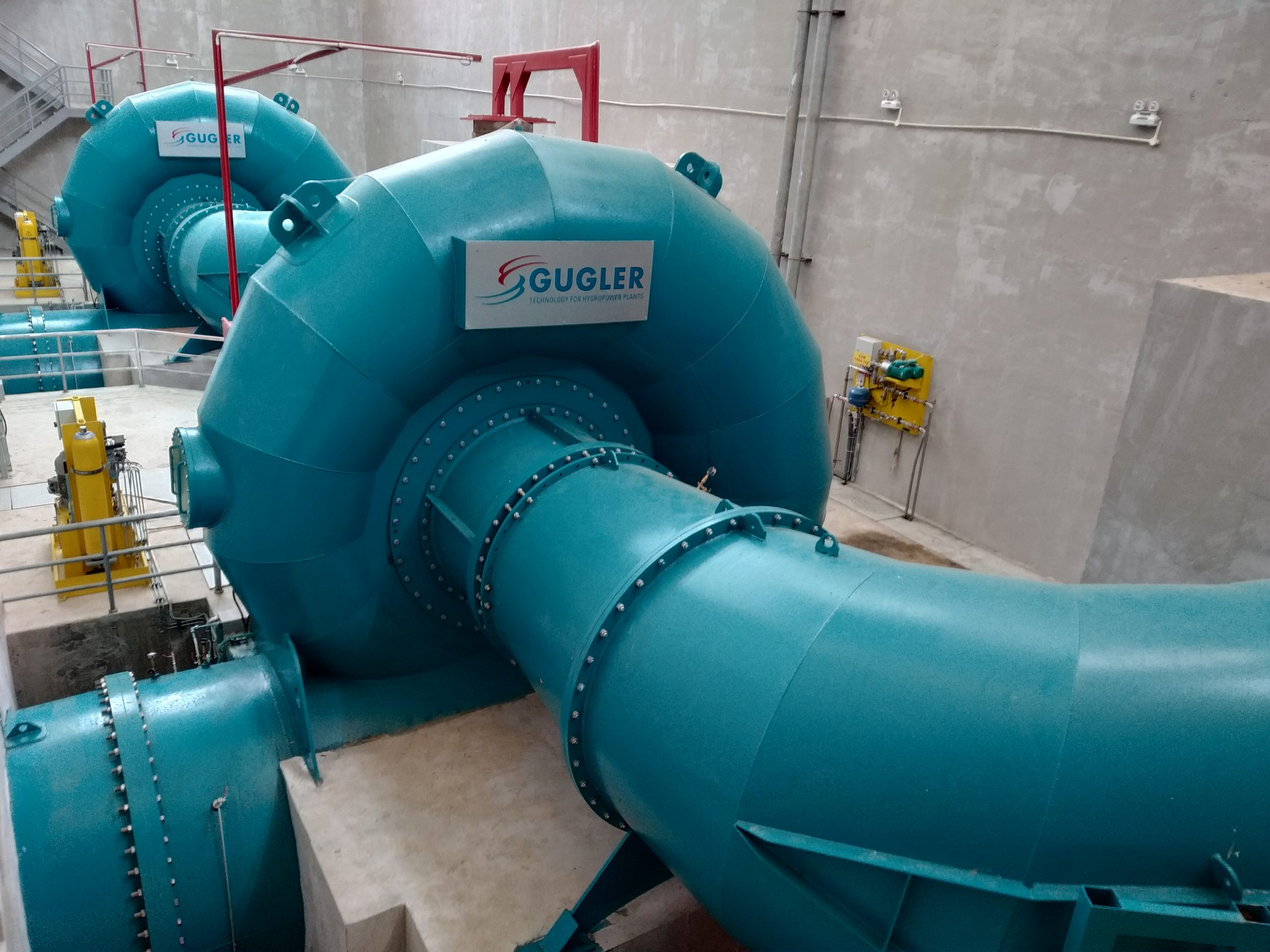
The Big Three: Choosing the Right Hydro Turbine
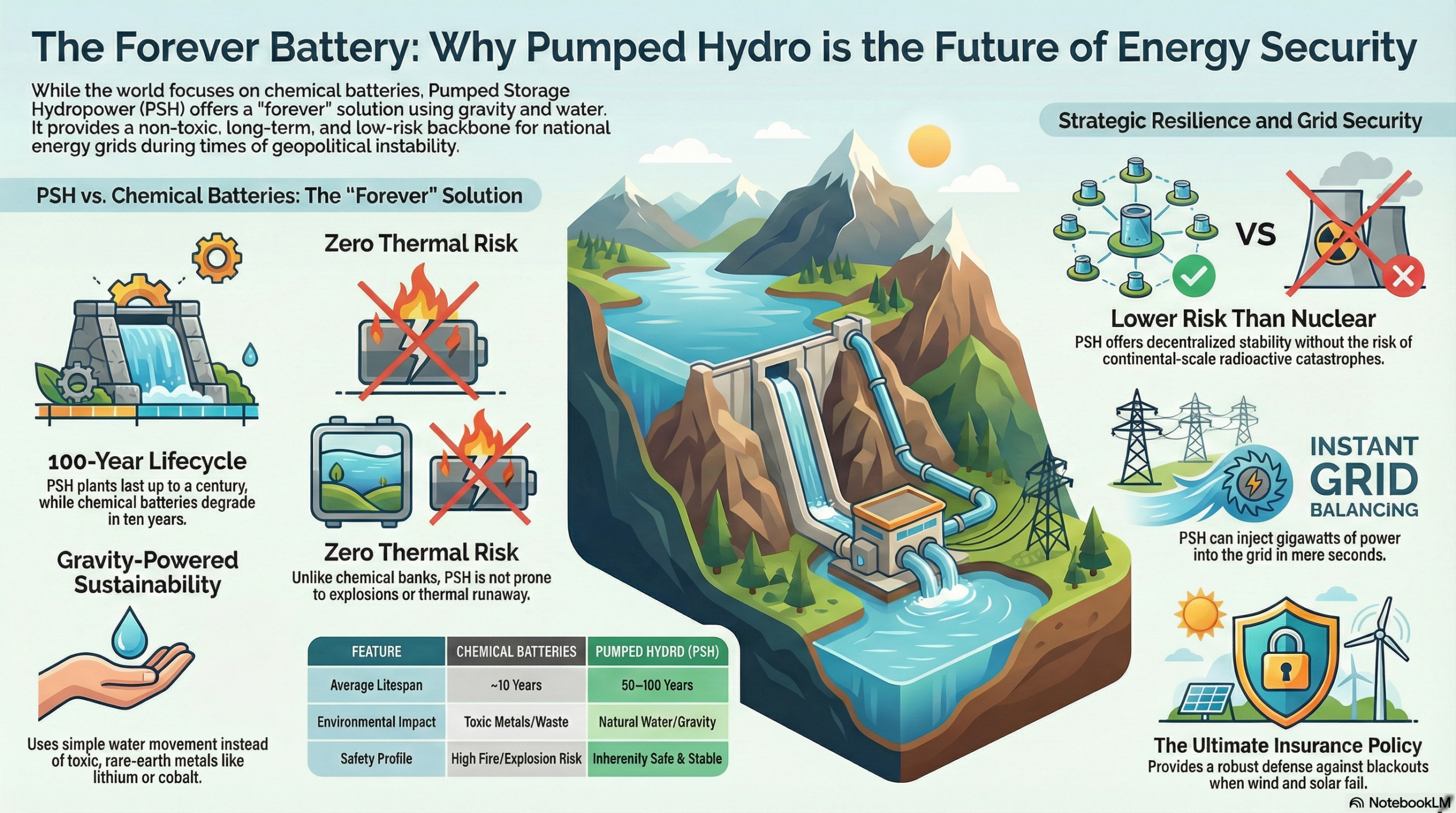
The Gravity Battery: Why Pumped Hydro is the Only Sovereign Solution for Global Energy Security
Why Pumped Storage Hydropower is the Ultimate Energy Security Solution
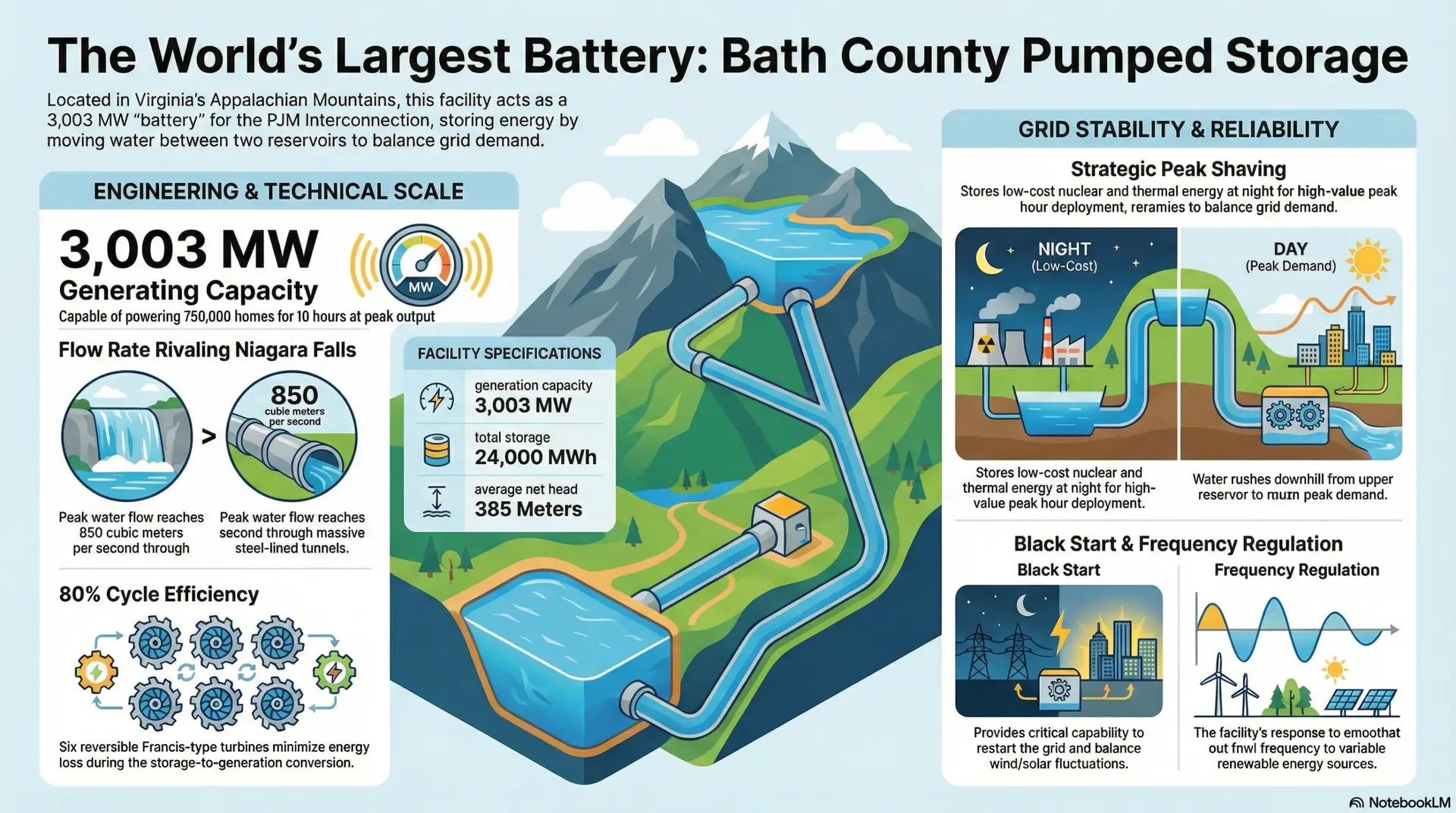
The Giant of Storage: Technical Overview of Bath County PSH
Site Integrity in Pumped Storage Hydropower: The Foundation of Geological and Geodetic Surveys
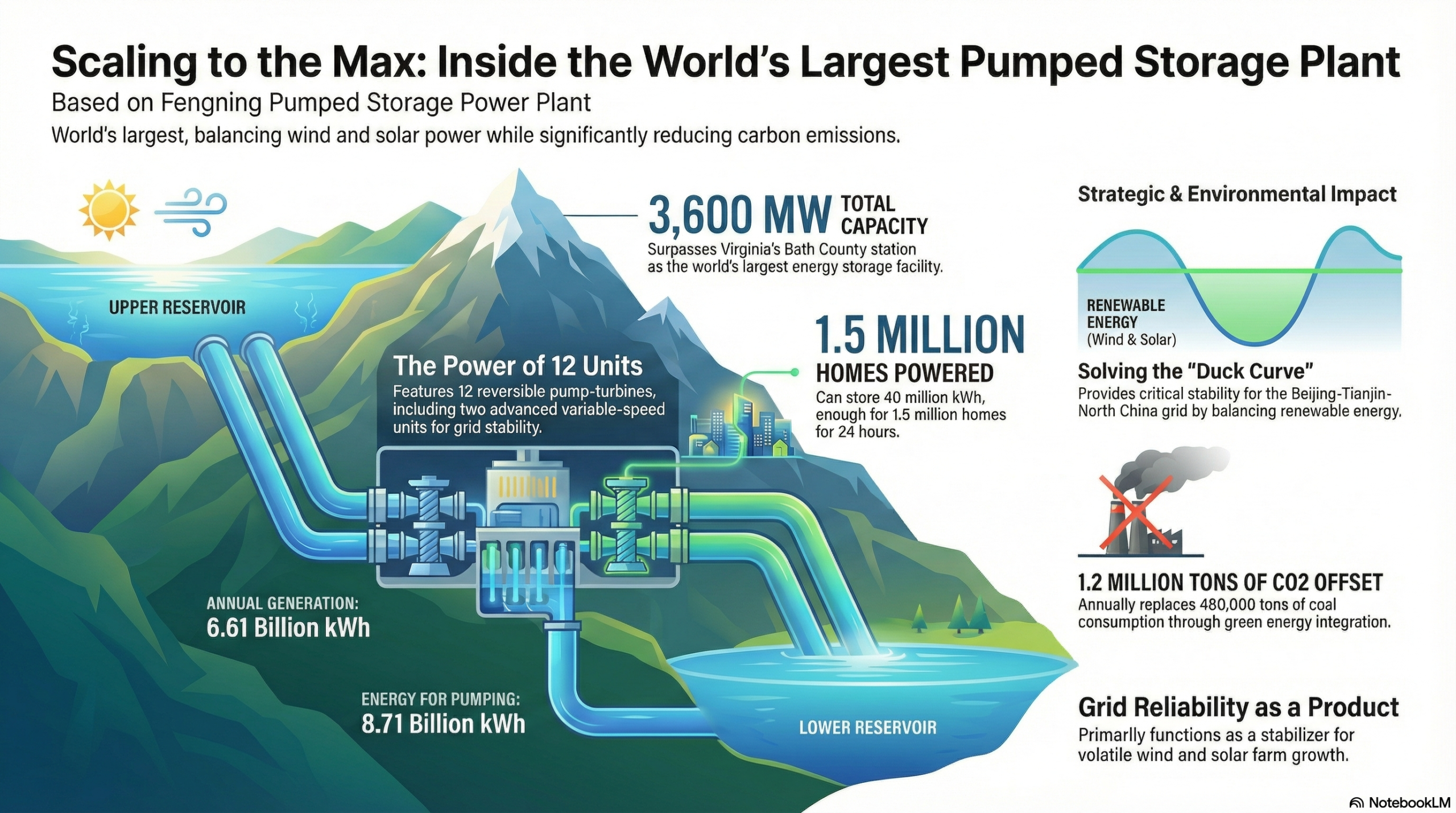
Scaling to the Max: Lessons from the World’s Largest PSH Plant in China
Submit details. Get custom technical calculations.
Submit your project details, and our engineering team will provide a comprehensive technical calculation. We analyze head, flow, and site conditions to ensure maximum efficiency for your future plant.