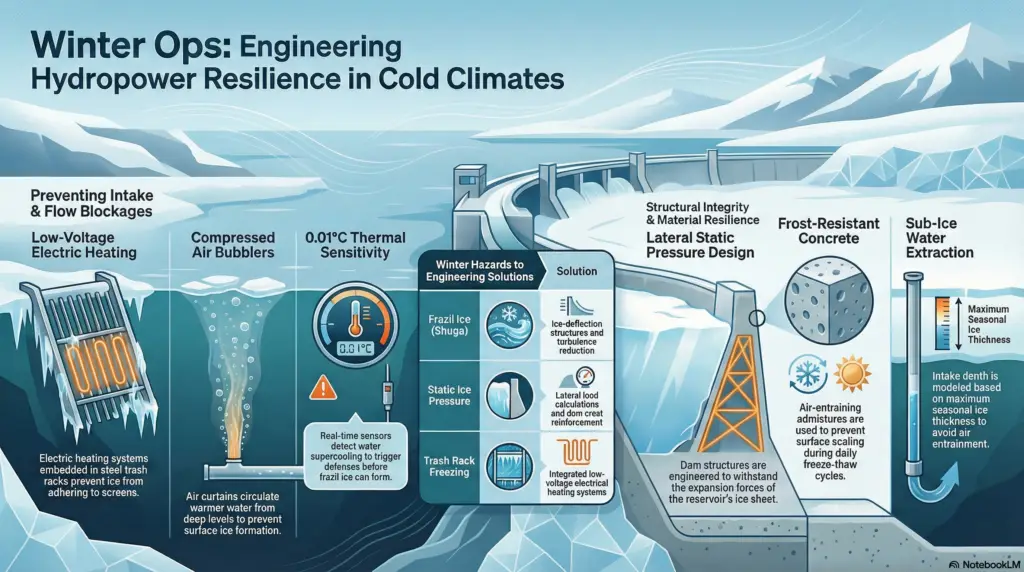
Operating a hydropower plant or a Pumped Storage Hydropower (PSH) facility in high-altitude or northern latitudes presents unique thermodynamic challenges. Sub-zero temperatures can lead to mechanical blockages and structural stress. At asumbhydro.com, we integrate specialized «Winter Ops» strategies into the design phase to ensure uninterrupted energy production throughout the coldest months.
1. Advanced Anti-Icing Systems
The intake structure is the most vulnerable point of a hydro plant in winter. If the trash racks (screens) freeze, the water flow is restricted, leading to a drop in pressure and potential turbine shutdown.
- Electric Heating of Trash Racks: We implement low-voltage electrical heating systems embedded directly into the steel bars of the trash racks. This prevents ice adhesion at the source.
- Compressed Air Bubblers: Utilizing air curtains near the intake creates a constant upward flow of warmer water from deeper levels, preventing surface ice from forming around critical gate mechanisms.
2. Mitigation of Frazil Ice (Shuga)
Frazil ice, or «shuga,» is a collection of loose, needle-like ice crystals that form in turbulent, supercooled water. Unlike surface ice, frazil ice travels within the water column and can rapidly clog intakes and tunnels.
- Shuga-Management Systems: We design intake geometries that minimize turbulence and implement specialized «ice-deflection» structures.
- Thermal Monitoring: Real-time sensors detect the supercooling of water (even by 0.01°C), triggering preventive measures before the frazil ice begins to agglomerate.
3. Hydrothermal Regime and Ice Statics
The «ice mirror» on a reservoir is not just a surface layer; it is a structural element that exerts significant pressure on the dam and intake towers.
- Static Ice Pressure: We calculate the expansion forces of the ice sheet. As temperatures fluctuate, the ice «pushes» against the dam crest. Our designs account for these lateral loads to prevent structural cracking.
- Ice Thickness Prediction: Using localized climate data, we model the maximum seasonal ice thickness. This determines the depth of the intake—ensuring that water is always drawn from below the ice level to avoid air entrainment and ice ingestion.
4. Freeze-Thaw Cycle Analysis
In mountainous regions, the temperature can swing above and below freezing point daily. This «cyclic loading» is one of the most destructive forces for concrete and rock.
- Durability Assessment: We determine the precise number of freeze-thaw cycles per season. This data dictates the choice of Frost-Resistant Concrete (using air-entraining admixtures) to prevent surface scaling and internal structural degradation.
- Seasonal Risk Mapping: By analyzing historical meteorological data, we identify «High-Risk Windows» (typically late autumn and early spring) where the risk of ice-related mechanical failure is highest.
Conclusion
Winter is not a downtime for hydro energy; it is a test of engineering foresight. A project that ignores the hydrothermal regime is destined for costly winter outages. ASUMB ensures that cold-climate challenges are converted into managed technical variables, providing stable energy regardless of the thermometer.
The Big Three: Choosing the Right Hydro Turbine
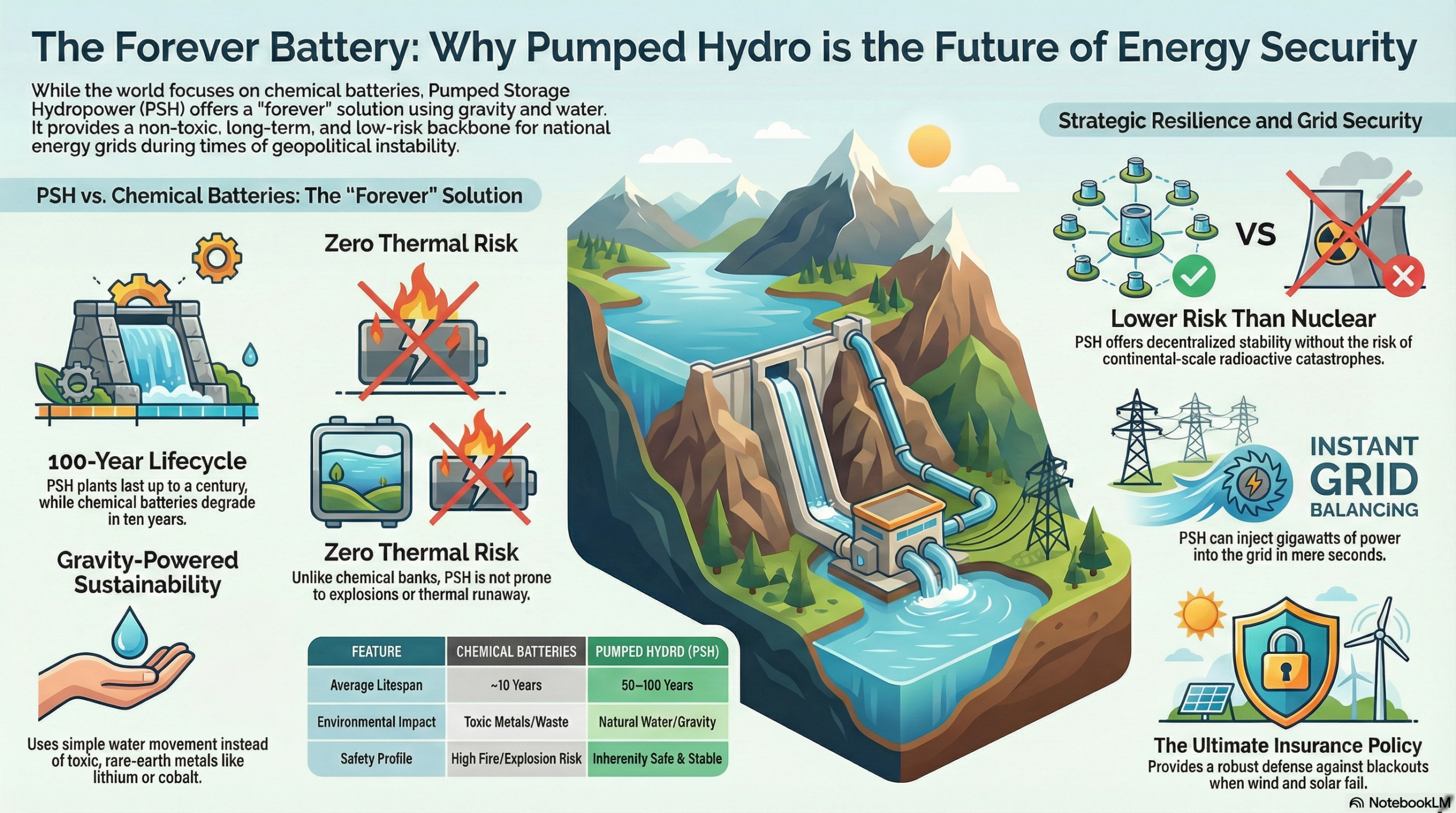
The Gravity Battery: Why Pumped Hydro is the Only Sovereign Solution for Global Energy Security
Why Pumped Storage Hydropower is the Ultimate Energy Security Solution
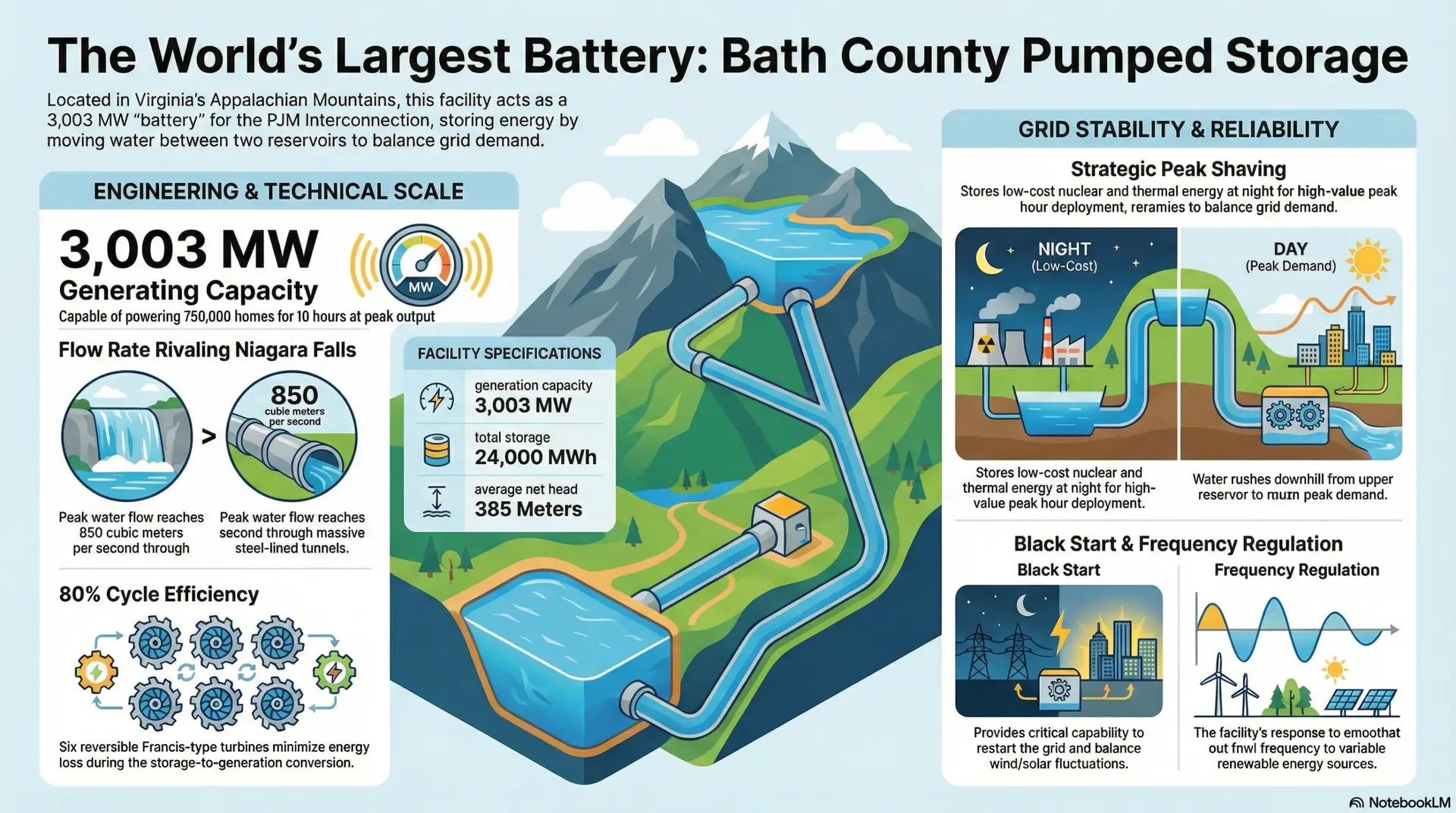
The Giant of Storage: Technical Overview of Bath County PSH
Site Integrity in Pumped Storage Hydropower: The Foundation of Geological and Geodetic Surveys
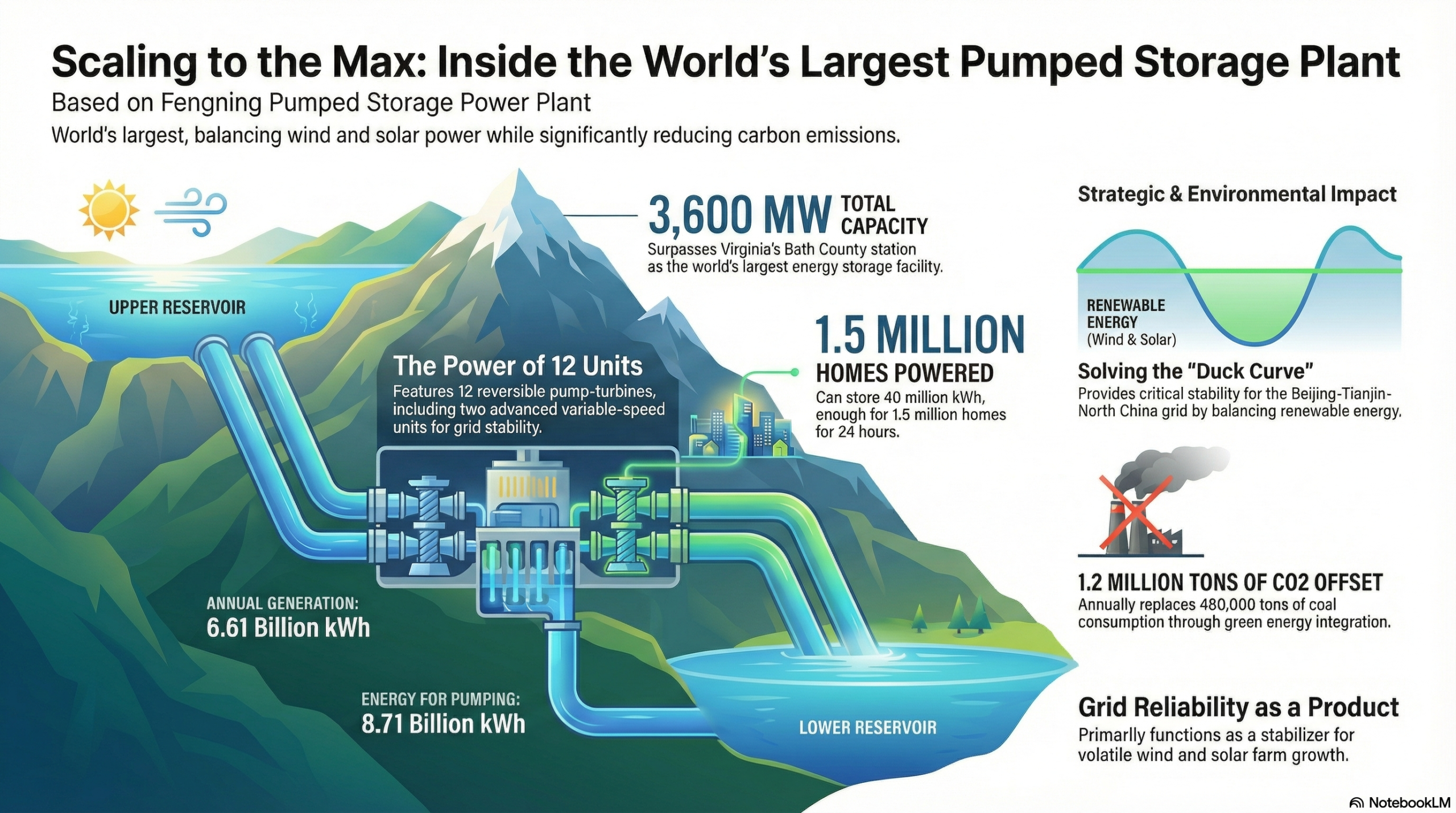
Scaling to the Max: Lessons from the World’s Largest PSH Plant in China
Submit details. Get custom technical calculations.
Submit your project details, and our engineering team will provide a comprehensive technical calculation. We analyze head, flow, and site conditions to ensure maximum efficiency for your future plant.