
Why Standards Matter
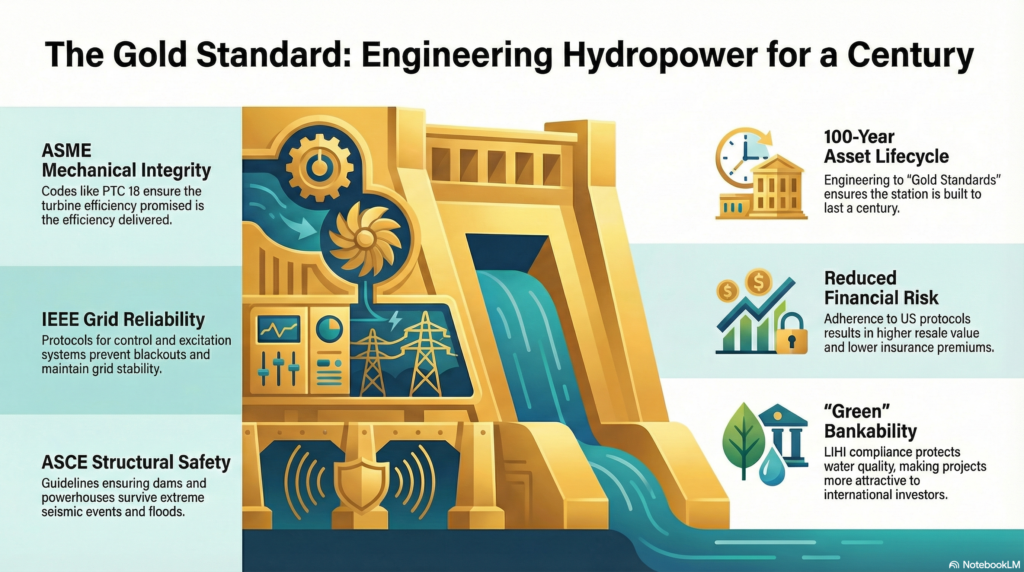
In the world of high-head turbines and massive water pressure, there is no room for error. Following the American «Gold Standard» of engineering ensures that a hydropower plant is not just a building, but a high-performance asset designed to last a century. At asumbhydro, we align our technical reviews with the most rigorous US protocols to guarantee safety and efficiency.
1. Mechanical Integrity: ASME Standards
The American Society of Mechanical Engineers (ASME) provides the blueprint for the «heart» of the station.
- ASME PTC 18 (Hydraulic Turbines): This is the definitive code for testing the performance of hydraulic turbines and pump-turbines. It ensures the efficiency you were promised is the efficiency you get.
- ASME Boiler & Pressure Vessel Code (BPVC): Critical for Penstocks (the high-pressure pipes). We ensure that every weld and material thickness can withstand extreme water hammer effects.
- ASME PTC 29: Specialized guidelines for speed-governing systems, essential for maintaining stable turbine rotation.
2. Grid Reliability: IEEE Protocols
The Institute of Electrical and Electronics Engineers (IEEE) sets the rules for how the plant speaks to the power grid.
- IEEE 1010: The comprehensive guide for the control of hydroelectric power plants.
- IEEE 1207: Guidelines for the application of turbine governing systems.
- IEEE 421.5: The standard for excitation system models, crucial for grid stability and avoiding blackouts.
3. Civil Engineering & Dam Safety: ASCE Guidelines
The American Society of Civil Engineers (ASCE) focuses on the structural «bones» of the project.
- ASCE Civil Engineering Guidelines for Planning and Designing Hydroelectric Developments: A multi-volume manual covering everything from waterways and intakes to powerhouses.
- Dam Safety Standards: Following US Bureau of Reclamation and ASCE protocols ensures the structure can survive extreme seismic events and floods.
4. Environmental & Sustainability Compliance
Modern US standards now integrate ecology into engineering.
- IHA & Low Impact Hydropower Institute (LIHI): We look for adherence to standards that protect water quality and fish passage, ensuring the project remains «Green» and bankable for international investors.
Conclusion: Engineering for the Next 100 Years
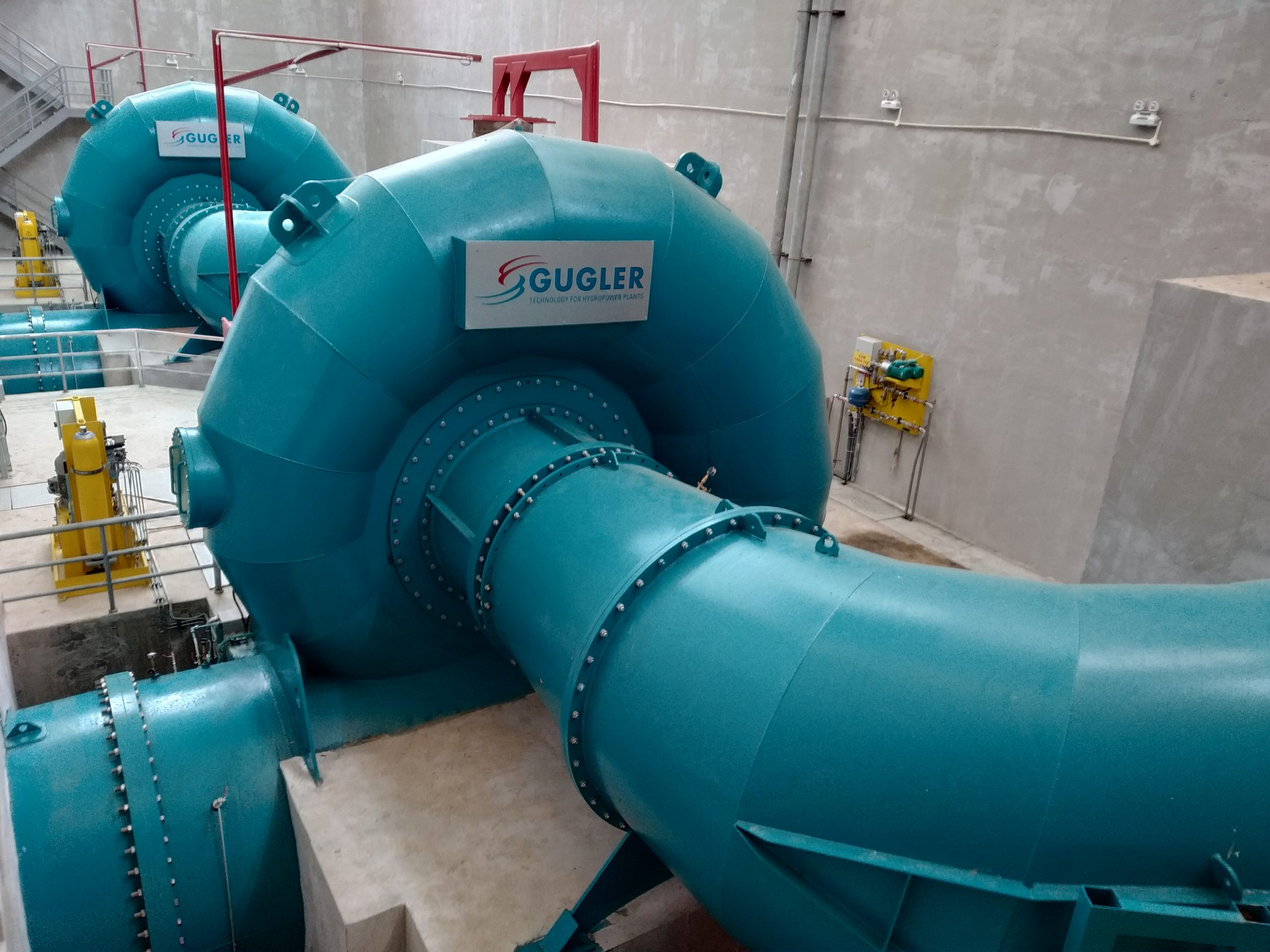
Building to US standards isn’t just about compliance; it’s about Risk Management. A plant designed under ASME and IEEE protocols has a significantly higher resale value and lower insurance premiums. With asumbhydro and Gugler technologies, you are choosing a future built on the world’s most trusted engineering foundations.
Submit details. Get custom technical calculations
Submit your project details, and our engineering team will provide a comprehensive technical calculation. We analyze head, flow, and site conditions to ensure maximum efficiency for your future plant.