

The World’s Largest Water Battery


PSH: The World’s Largest Water Battery

Introduction: Why Water Beats Lithium

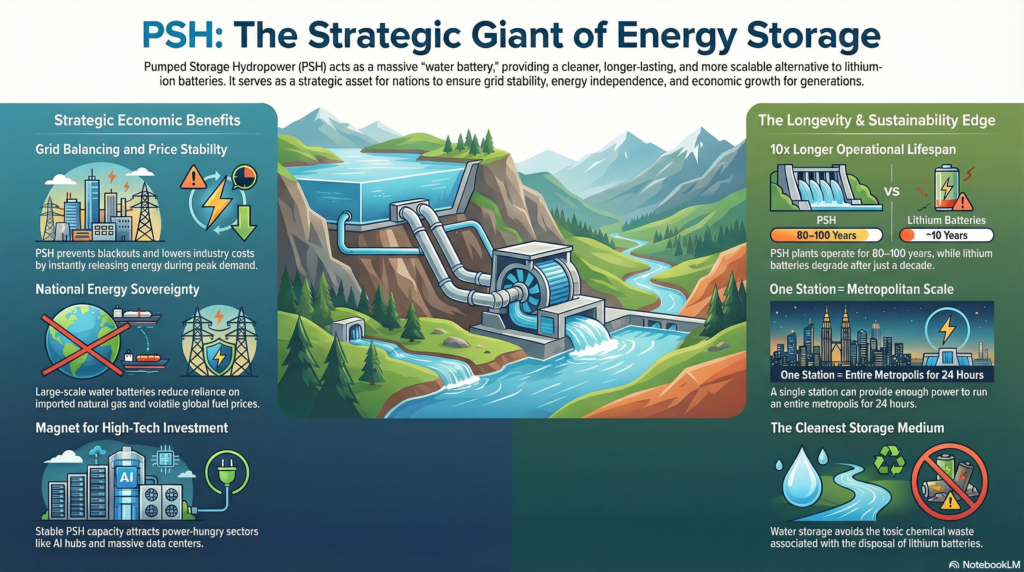
Modern energy markets require massive storage capacity to remain stable. While lithium-ion batteries are popular for small gadgets, Pumped Storage Hydropower (PSH) acts as a giant «water battery» for entire nations. At asumb, we believe that PSH technology is the only solution capable of securing true energy sovereignty.

Three Examples of Economic and National Stability

  1. Grid Balancing (The European Model): During periods of excess solar power, these stations pump water to upper reservoirs. Consequently, when demand peaks in the evening, they instantly release energy. This prevents blackouts and keeps electricity prices low for heavy industry.
  2. Energy Independence (The Asian Model): Nations with large-scale PSH significantly reduce their reliance on imported natural gas. By using a national «water battery,» these countries protect themselves from global fuel price volatility.
  3. Attracting High-Tech Investment: Regions with stable PSH capacity become magnets for data centers and AI hubs. Therefore, a PSH plant serves as an economic anchor for modern technology sectors.

The Pros and Cons of PSH Technology

The Pros:

  • Longevity: A PSH plant operates for over 80–100 years. In contrast, lithium batteries degrade significantly after just a decade.
  • Massive Scale: One station can power an entire metropolis for a full day.
  • Sustainability: Water is the cleanest storage medium. Furthermore, it avoids the toxic waste associated with chemical battery disposal.

The Cons:

  • Geography: Construction requires specific terrain with elevation changes.
  • Initial CAPEX: Building a dam involves high upfront costs. However, the total cost of storage (LCOS) remains the lowest in the energy industry.

Expert Advice: Trust the Professionals

Owning a PSH station is like having a «strategic insurance policy» for your country. Clearly, it is an asset that will provide wealth for your grandchildren. Nevertheless, building such a complex facility requires zero-tolerance for errors. Huge water pressure demands strict compliance with ASME and IEEE standards.

Submit details. Get custom technical calculations.

Submit your project details, and our engineering team will provide a comprehensive technical calculation. We analyze head, flow, and site conditions to ensure maximum efficiency for your future plant.

1taraza ii, colombia, 2024
Resource Center

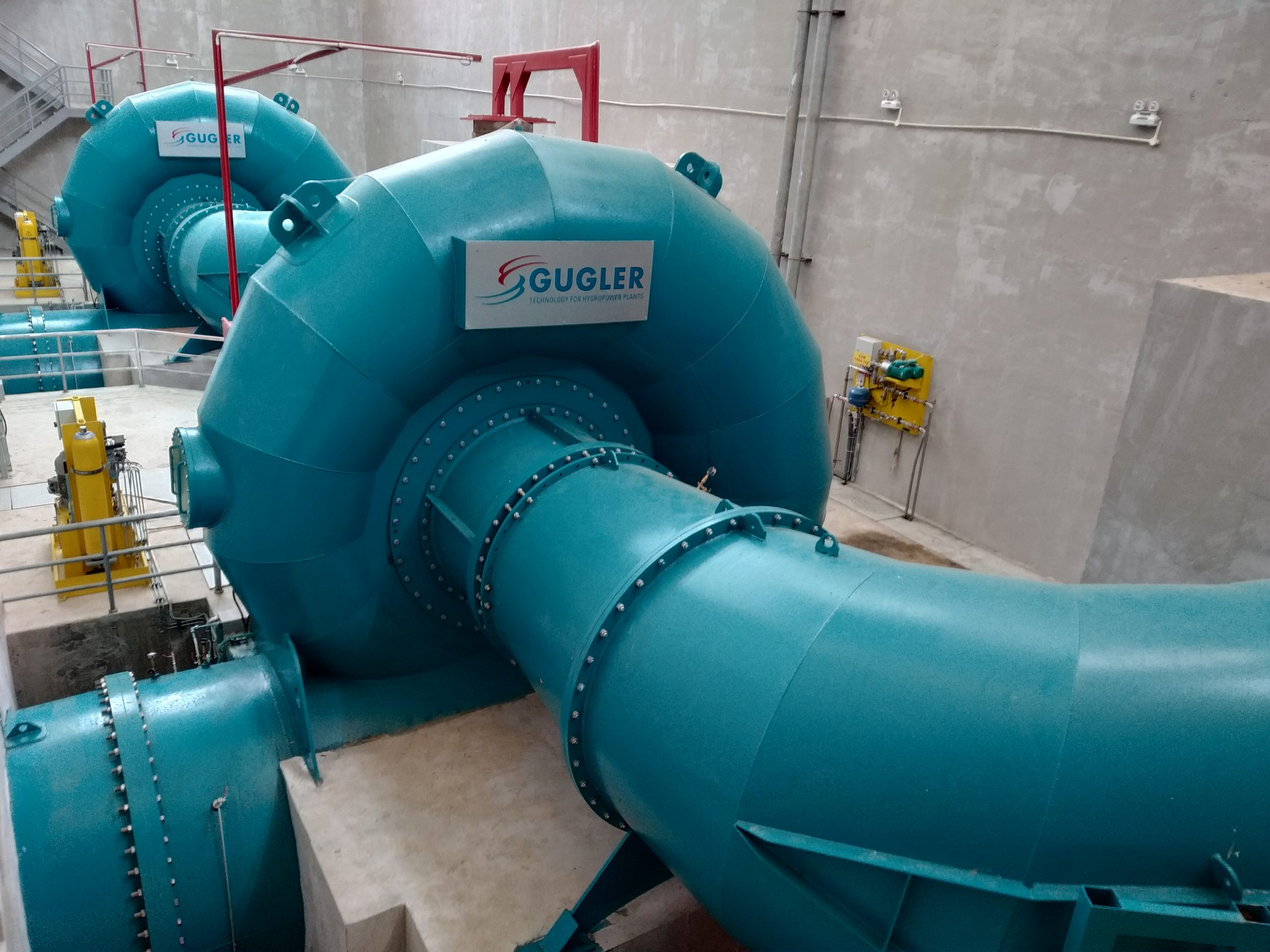
The Big Three: Choosing the Right Hydro Turbine

The Heart of the Plant Choosing the correct turbine is the most critical decision in hydropower engineering. The choice depends entirely on two factors: Head ...
Read More →
1bach dang, vietnam, 2021
Resource Center

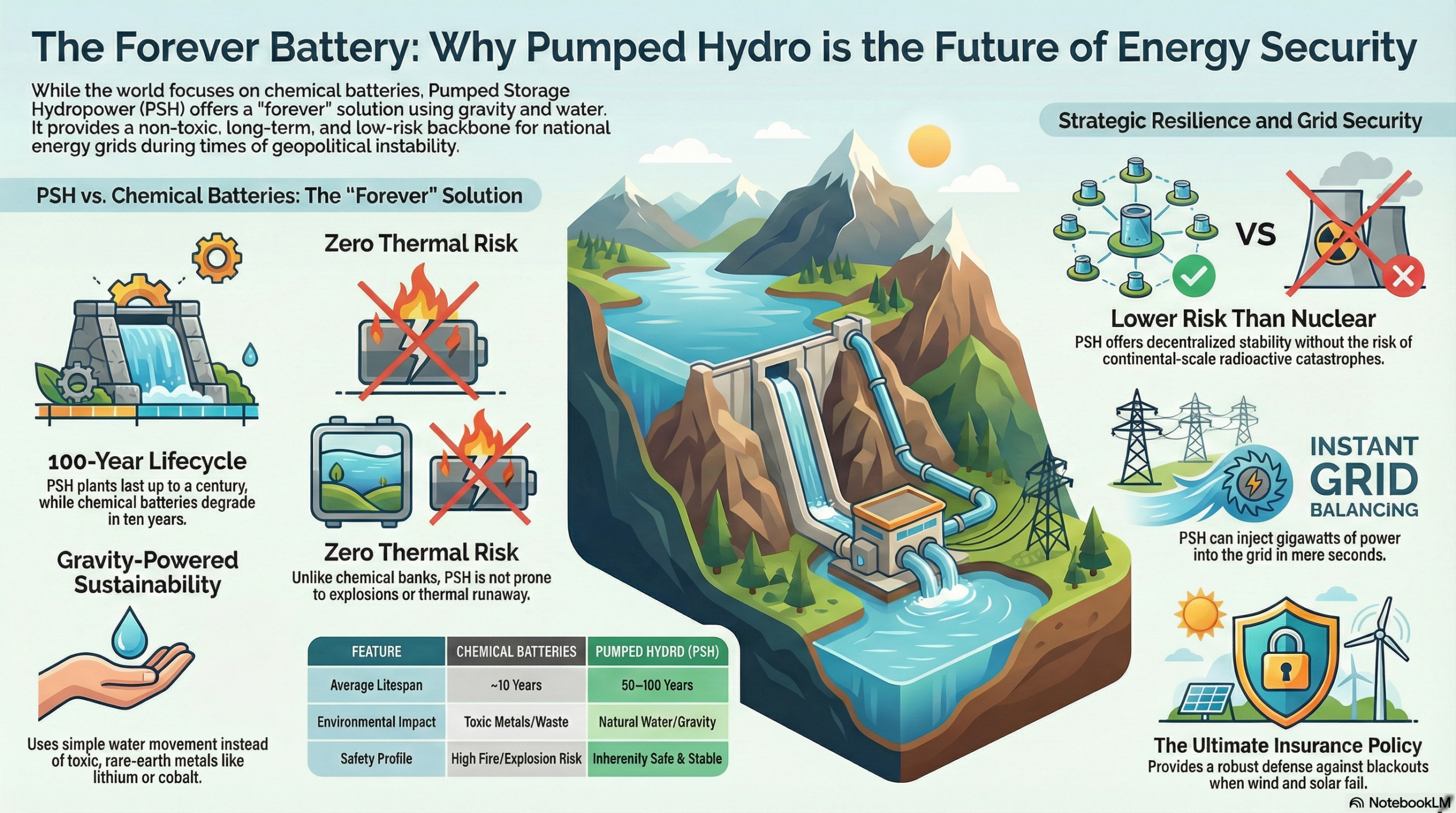
The Gravity Battery: Why Pumped Hydro is the Only Sovereign Solution for Global Energy Security

Оставьте комментарий / Editors Pick, Stock Market / От asumb The Gravity Battery: Why Pumped Hydro is the Only Sovereign Solution for Global Energy Security The Battery Myth vs. Natural ...
Read More →
Classic Hydro

Why Pumped Storage Hydropower is the Ultimate Energy Security Solution

Discover why PSH is the only reliable «gravity battery» for grid stability. Learn why chemical batteries and nuclear risks can’t match the safety and scale ...
Read More →
Land & Sites

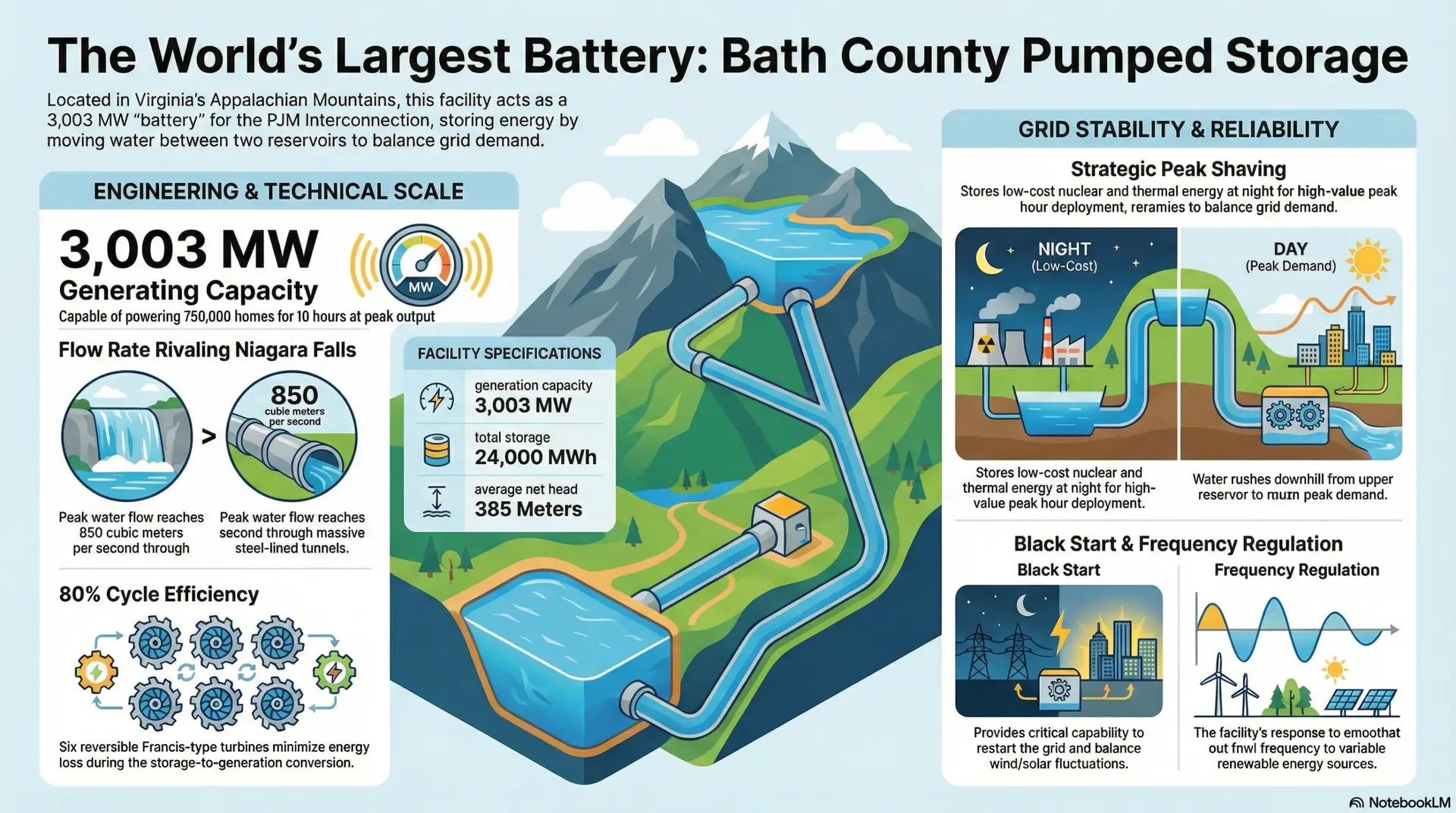
The Giant of Storage: Technical Overview of Bath County PSH

IThe Bath County Pumped Storage Station is a true engineering marvel. It is located in Virginia, USA. Many experts call it the «World’s Largest Battery.» ...
Read More →
Classic Hydro

Site Integrity in Pumped Storage Hydropower: The Foundation of Geological and Geodetic Surveys

The viability of a Pumped Storage Hydropower (PSH) project depends entirely on the structural integrity of the site. Before a single cubic meter of concrete ...
Read More →
Portfolio

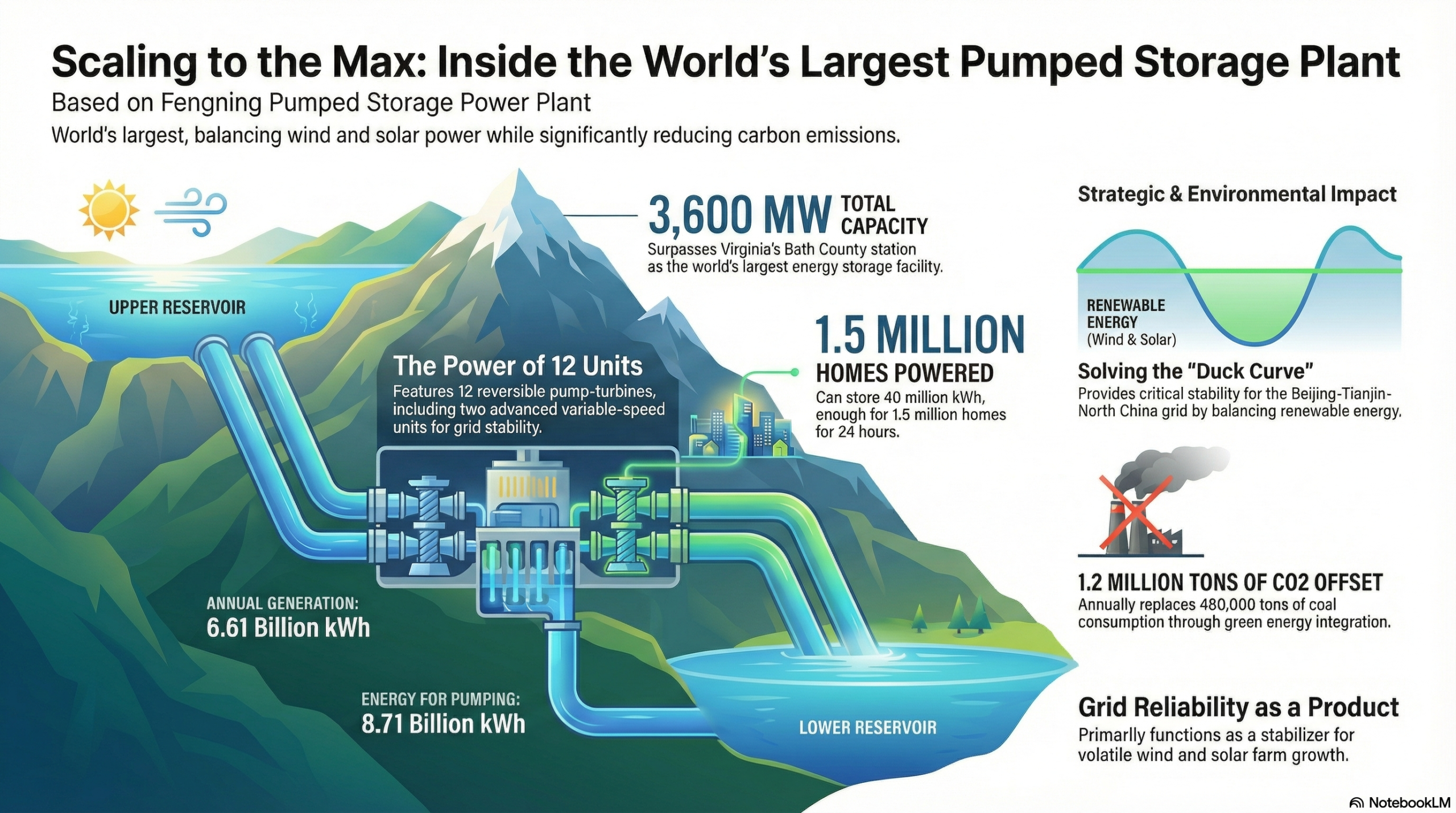
Scaling to the Max: Lessons from the World’s Largest PSH Plant in China

The Apex of Pumped Storage The Fengning Pumped Storage Power Plant in Hebei Province is a record-breaking achievement. With a total capacity of 3,600 MW ...
Read More →

Hydro News